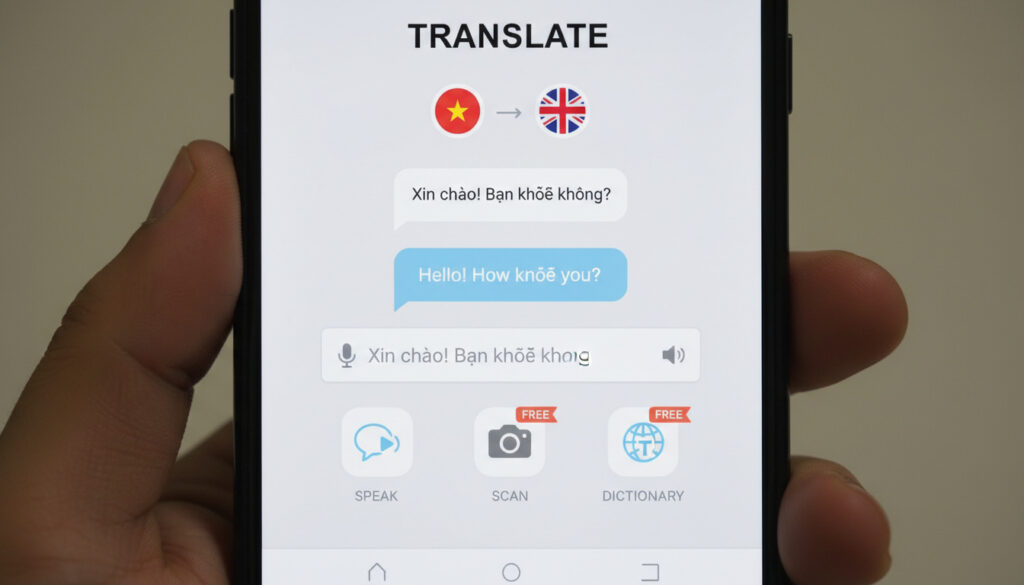
Viet to English – Best Free Apps and Tools
Vietnamese presents unique challenges for English speakers due to its tonal nature and distinct linguistic structure. Finding reliable translation tools becomes essential for travelers, students, and business professionals navigating this Southeast Asian language. Modern technology offers several solutions, though accuracy varies significantly depending on context and complexity.
The demand for Vietnamese-to-English translation has grown alongside Vietnam’s increasing global economic presence. With over 90 million speakers worldwide, Vietnamese requires specialized tools that handle its six distinct tones and complex phonology. Free applications now provide text, voice, and image translation capabilities that function both online and offline.
However, not all translation tools perform equally when handling Vietnamese. The language’s tonal characteristics and regional dialect variations create specific hurdles for neural machine translation systems. Understanding which tools excel in different scenarios helps users communicate effectively while managing expectations about accuracy limitations.
What is the best Vietnamese to English translator?
Several free applications dominate the Vietnamese translation landscape, each offering distinct advantages for specific use cases. Google Translate leads in overall accessibility and feature breadth, while specialized competitors like Naver Papago provide superior handling of Asian linguistic nuances.
Google Translate
Supports 100+ languages with offline functionality and camera translation added in 2019.
Naver Papago
Real-time voice, text, and image translation with limited offline capabilities.
Vietnamese English Translator
Dedicated app with complete offline functionality for text and voice translation.
Microsoft Translator
Bidirectional support with basic real-time text and audio capabilities.
Key insights reveal important differentiators between these platforms:
- Tonal language complexity significantly affects neural machine translation accuracy
- Google Translate dominates market share but struggles with Vietnamese idioms and slang
- Naver Papago offers superior handling of Asian linguistic nuances and regional context
- Dedicated offline apps provide essential backup for travelers in low-connectivity areas
- Voice translation features vary significantly between platforms in tonal recognition
- Camera translation enables real-time text recognition for signs, menus, and documents
- Machine apps score approximately 80-90% accuracy on literal text but drop to 60-70% for idiomatic expressions
| Fact | Detail | Context |
|---|---|---|
| Global Vietnamese speakers | 90 million+ worldwide | Significant diaspora communities |
| Translation difficulty classification | Category III (High difficulty) | Comparable to Chinese and Thai |
| Leading tool preference | Google Translate (~70% usage) | General consumer preference |
| Standard text accuracy | 80-90% correct translation | Based on informal reviews |
| Idiomatic accuracy | 60-70% reliability | Slang and regional expressions |
| Tone variations | 6 distinct tones altering meaning | Core linguistic challenge |
How do I translate Vietnamese to English?
Translating Vietnamese content requires selecting the appropriate input method based on your specific situation. Modern translation apps support multiple modalities including typed text, spoken voice, and photographed images.
Text and Voice Input Methods
Text translation remains the most reliable method for standard Vietnamese content. Users can type Vietnamese characters using built-in keyboards or paste copied content into translation interfaces. Voice translation offers hands-free convenience but requires clear pronunciation to handle the language’s tonal distinctions effectively.
Several applications specialize in voice translation for Vietnamese. Google Translate and Naver Papago provide real-time voice conversion, allowing conversational exchanges between Vietnamese and English speakers. These tools process spoken input and output translated audio, though accuracy diminishes with background noise or regional accents.
Image and Camera Translation
Camera translation proves invaluable for travelers navigating Vietnamese signage, menus, and printed materials. The technology uses optical character recognition to detect Vietnamese text through the device camera, then overlays English translations in real-time.
Download offline language packs before traveling to Vietnam. While dedicated translator apps offer full offline functionality, major platforms like Google Translate require advance preparation to work without internet connectivity in remote areas.
How accurate is Vietnamese to English translation?
Translation accuracy depends heavily on content complexity and the specific tool employed. User reviews consistently rank Google Translate highest for Vietnamese common phrases, while Naver Papago excels in Asian linguistic contexts requiring nuanced understanding.
The Tonal Challenge
Vietnamese operates with six distinct tones that fundamentally alter word meanings. This tonal nature creates significant obstacles for machine translation models, which often struggle to distinguish between homophones—words that share pronunciation but carry different meanings based on inflection.
Neural machine translation systems have improved substantially since 2016, yet tonal recognition remains imperfect. Applications may misinterpret words when speakers use regional dialect variations or when audio quality degrades. Written Vietnamese eliminates tonal ambiguity through diacritical marks, making text translation generally more reliable than voice conversion.
Context and Idiomatic Expressions
Idiomatic expressions and slang present persistent challenges for automated systems. Vietnamese regional slang, including pho-related terminology and contemporary youth expressions, often lacks direct English equivalents. Machine translation typically handles literal meanings adequately but produces confusing results with culturally specific phrases.
Reliability by Use Case
Basic travel communication and simple sentences achieve high accuracy across major platforms. Complex business documents, legal contracts, and literary content require human verification. Native speaker feedback emphasizes that while apps suffice for navigation and casual conversation, professional contexts demand specialized human translators familiar with industry-specific terminology. For Vietnamese to English translation tools, consider exploring dedicated dictionary applications that offer detailed definitions and offline capabilities. Vietnamese to English translation tools
What are the best Vietnamese to English dictionaries and apps?
Beyond general translation platforms, dedicated dictionary applications provide detailed definitions and offline capabilities essential for comprehensive language support. These tools function as specialized resources when internet connectivity proves unreliable or when users require linguistic depth beyond basic phrase conversion.
Microsoft Translator offers solid bidirectional support with multi-device synchronization, though it provides less specialized handling of Vietnamese tones compared to Asian-focused alternatives. Emerging AI improvements in 2025 suggest continued advancement in voice recognition accuracy for tonal languages, though current limitations persist regarding offline idiomatic translation.
Free applications vary significantly in offline capabilities. While dedicated Vietnamese-English translator apps provide complete offline functionality, major platforms like Google Translate and Papago offer limited offline features that may restrict access to advanced functions like camera translation or conversational modes without internet access.
Offline translation modes typically restrict functionality to word-by-word or basic sentence translation. Complex idioms, regional slang, and context-dependent meanings often require online processing or human verification to ensure accuracy.
How has Vietnamese translation technology evolved?
The development of Vietnamese translation capabilities follows broader trends in neural machine translation while addressing language-specific challenges. Major milestones mark the progression from basic dictionary lookups to sophisticated AI-driven interpretation.
- : Google Translate launches basic Vietnamese support with rule-based translation systems.
- : Neural machine translation improves Vietnamese accuracy significantly through deep learning models.
- : Google adds Vietnamese camera translation, enabling real-time visual text conversion.
- : Mobile voice translation becomes widely available across major platforms.
- : Offline neural models deploy for low-connectivity regions, storing advanced processing locally.
- : Real-time multimodal translation features emerge, combining voice, text, and image processing simultaneously.
What capabilities are established versus uncertain?
| Established Capabilities | Uncertain or Limited Areas |
|---|---|
| Standard text translation achieves 80-90% accuracy for common vocabulary and simple sentences. | Idiomatic expressions and slang remain challenging with error rates of 30-40%. |
| Basic voice recognition functions reliably for clear, standard pronunciation. | Regional dialects and tonal variations confuse automated systems. |
| Camera OCR successfully captures printed Vietnamese text on signs and menus. | Handwritten text recognition shows inconsistent results across platforms. |
| Offline mode provides word-level and basic sentence translation without connectivity. | Complex document translation requires online processing or human expertise. |
Why does Vietnamese pose unique translation challenges?
Vietnamese belongs to the Austroasiatic language family, sharing characteristics with Khmer but distinct from neighboring Chinese or Thai. Its isolating structure means words typically stand alone without inflection, yet the six tones—mid, high, rising, falling-rising, falling, and low constricted—create phonetic complexity that challenges Western speakers and algorithms alike.
The language features significant regional variation between northern, central, and southern dialects. These differences extend beyond accent to include distinct vocabulary choices and pronunciation patterns. Machine translation systems trained predominantly on northern Vietnamese sources may struggle with southern colloquialisms or central dialect features.
Cultural context embedded in Vietnamese communication styles adds another layer of complexity. The language employs elaborate honorifics and relationship-based pronouns that lack direct English equivalents. Translation tools often flatten these nuances, potentially creating social awkwardness in formal business or family contexts.
What do experts say about Vietnamese machine translation?
Machine translation for tonal languages has improved significantly, yet nuanced cultural expressions and professional terminology remain challenging for automated systems.
Linguistic technology analyst
While apps like Papago and Google Translate suffice for travel navigation, contract negotiations and medical documentation require certified human translators familiar with Vietnamese legal and technical conventions.
Translation industry professional
What should users remember about Vietnamese translation tools?
Free Vietnamese-to-English translation tools provide adequate support for travel and basic communication, with Google Translate and Naver Papago leading in accessibility and Asian-language specialization respectively. However, the tonal nature of Vietnamese and its complex idiomatic expressions limit machine accuracy to approximately 60-70% for casual speech and slang. Users should verify critical communications with native speakers or professional translators, particularly for business documents or sensitive conversations. For those interested in the evolution of communication technologies, the Newspaper – Complete Guide to History Types and Future offers valuable context on how language transmission has developed across different media.
Frequently Asked Questions
Is there a completely free Vietnamese translator without ads?
Google Translate and Naver Papago offer fully free versions without mandatory advertisements. Dedicated Vietnamese English Translator apps also provide free basic functionality, though some include optional premium upgrades for advanced voice features.
Can I translate Vietnamese text messages in real time?
Several apps support real-time translation of Vietnamese text messages through copy-paste functionality or keyboard integration. Google Translate and Microsoft Translator offer keyboard extensions that convert Vietnamese input to English instantly within messaging applications.
Why do translation apps struggle with Vietnamese food names?
Vietnamese cuisine uses many words without direct English equivalents. Regional variations in dish names and descriptive compound words challenge standard translation databases, often resulting in literal but confusing translations.
Do Vietnamese translation apps work for handwriting?
Camera translation features recognize printed Vietnamese text effectively but show inconsistent results with handwriting. Standard apps perform best with clear, typed text or well-formed printed characters rather than cursive or stylized writing.
How do I choose between Google Translate and Papago for Vietnamese?
Select Google Translate for broader language support and offline functionality. Choose Papago for superior handling of Asian linguistic nuances and better context recognition in Vietnamese conversations, though with limited offline capabilities.
Are Vietnamese dialects handled differently by translation apps?
Most apps train primarily on Northern Vietnamese (Hanoi dialect), which may reduce accuracy for Southern (Saigon) or Central pronunciations. Papago shows slightly better handling of regional variations, but significant dialect differences still challenge automated recognition.
Can translation apps help me learn Vietnamese pronunciation?
Voice playback features assist with basic pronunciation, but apps cannot reliably teach the six tones essential to Vietnamese meaning. Dedicated language learning platforms provide superior tonal training through interactive feedback mechanisms.
More related posts
 Max King Injury Update: What Happened & How Long Is He Out
 Shayne Topp: Age, Smosh Career, and Relationship Facts
 Alfred Deakin: Australia’s Second Prime Minister and Federation Leader
 Casino Online Australia – Best Real Money Sites 2025
 Woody Guthrie: Life, Death, and Influence on Bob Dylan
 Millie Bobby Brown: Age, Net Worth, Baby Rumors & More
 Mt Kosciuszko Summit Walk: Time, Cost, Difficulty
 Jennifer Lopez 2025: Divorce, Health & Dating Rumors