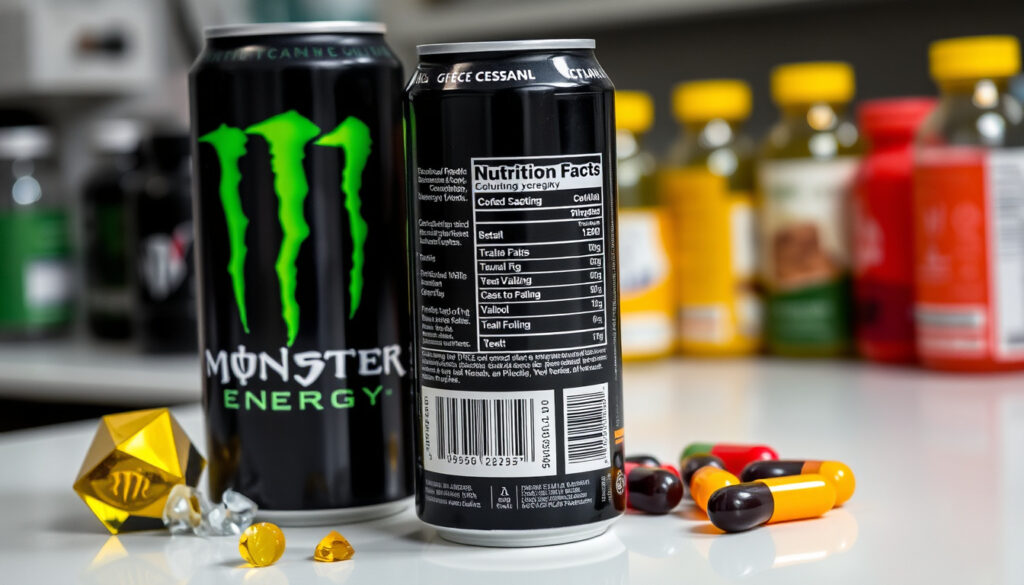
This guide examines the complete ingredient profile, caffeine content, and nutritional facts for Monster Energy products. The information draws from official manufacturer sources, retail product listings, and food safety data to separate verified facts from common misconceptions about this popular energy drink line.
Two specific product variants—the original Monster Energy and the sugar-free Ultra Sunrise—serve as primary examples throughout this article, with relevant distinctions noted where formulations differ between variants.
What Is Monster Energy Drink?
Monster Energy Drink is a carbonated energy beverage produced by Monster Beverage Corporation. The company has maintained a presence in the energy drink sector for over eighteen years, positioning its products as fuel for active lifestyles centered on athletic performance and adrenaline-fueled pursuits.
The product line spans multiple variants, from the classic high-sugar original formulation to zero-sugar alternatives. Each variant combines caffeine with a proprietary blend of ingredients that the manufacturer describes as natural and well-studied. The brand maintains strong associations with professional athletes, musicians, and extreme sports competitions worldwide.
Product Overview
Core ingredient providing alertness and focus; exact amounts vary by variant
Original: 54g per 16oz / Zero Sugar: 0g
Original: varies / Ultra Sunrise: 10 per 16oz
Monster Beverage Corporation
Key Facts About Monster Energy
- Over 22 billion cans consumed safely worldwide over 18 years of market presence
- Products formulated with both standard and sugar-free variants
- Target demographic includes athletes, musicians, and extreme sports enthusiasts
- Brand messaging emphasizes “natural” and “studied” ingredients
- Manufacturer disputes characterization of products as “loaded with caffeine and sugar”
- Product warnings advise against use by children and caffeine-sensitive individuals
Available Variants
| Variant | Serving Size | Calories | Sugar | Key Features |
|---|---|---|---|---|
| Original | 16 oz | Not specified | 54g | Classic green can, high-sugar energy blend |
| Ultra Sunrise | 16 oz | 10 | 0g | Sugar-free, light lemon flavor, 10 calories |
Additional variants and seasonal flavors are available through major retail outlets and the official Monster Energy website. Each variant maintains the core energy blend while adjusting sugar content and sweetener profiles based on the specific product line.
Monster Energy Drink Ingredients and Nutrition Facts
The ingredient profile of Monster Energy drinks encompasses a combination of functional compounds, vitamins, sweeteners, and standard beverage components. Understanding these elements helps consumers make educated decisions about what they are consuming with each serving.
Core Ingredients in Monster Energy Original
The original Monster Energy variant contains a comprehensive list of ingredients that work together to deliver the advertised energy effects. According to product listings from major retailers, the formulation includes:
- Carbonated water as the base liquid
- Sugar and glucose as primary sweeteners
- Citric acid for flavor enhancement
- Natural flavors for taste profile development
- Taurine supporting skeletal muscle function and physical endurance
- Sodium citrate for flavor balancing
- Added color for visual presentation
- Panax ginseng extract as a botanical component
- L-carnitine L-tartrate for fatty acid transport
- Caffeine as the primary stimulant
- Preservatives including sorbic acid, benzoic acid, potassium sorbate, and sodium benzoate
- Niacinamide (Vitamin B3) for energy metabolism
- Sucralose as an alternative sweetener
- Salt for electrolyte balance
- D-glucuronolactone for supporting the body’s natural processes
- Inositol aiding nutrient processing into energy
- Guarana extract as an additional caffeine source
- Pyridoxine hydrochloride (Vitamin B6) for metabolism support
- Riboflavin (Vitamin B2) for energy conversion
- Maltodextrin as a carbohydrate source
- Cyanocobalamin (Vitamin B12) for energy metabolism
Sugar-Free Variant Ingredients
The Ultra Sunrise sugar-free variant replaces glucose and standard sugar with different sweetening agents. Product information from retail sources indicates these ingredients differ from the original formulation:
- Erythritol as the primary sugar substitute
- Lemon pulp for flavor
- Acesulfame potassium for additional sweetness
- Added colors (Yellow 5, Yellow 6) for visual appearance
The core functional ingredients—taurine, caffeine, B vitamins, guarana, and other energy-supporting compounds—remain consistent between variants, according to manufacturer information.
The manufacturer states that key functional ingredients serve specific purposes: caffeine blocks brain chemicals inducing relaxation to boost alertness and reaction time, taurine supports muscle function and heart protection through calcium regulation, B vitamins convert food to energy, and inositol aids nutrient processing into usable energy.
Nutritional Comparison
| Nutrient | Original (per 16oz) | Ultra Sunrise (per 16oz) | Ultra Sunrise % Daily Value |
|---|---|---|---|
| Calories | Not specified | 10 | — |
| Sugar | 54g | 0g | 0% |
| Added Sugar | 54g | 0g | 0% |
| Sodium | Not specified | 135mg | 6% |
| Vitamin B12 | Not specified | — | 490% |
| Vitamin B6 | Not specified | — | 240% |
| Niacin (B3) | Not specified | — | 250% |
| Pantothenic Acid | Not specified | — | 400% |
For readers exploring options for managing caffeine and sugar intake, finding nearby healthcare facilities or specialist providers can offer personalized guidance on dietary choices and energy drink consumption.
How Much Caffeine Is in Monster Energy Drink?
Caffeine represents a core ingredient in Monster Energy beverages, functioning as the primary stimulant that delivers the advertised alertness and focus benefits. The manufacturer describes caffeine as a well-studied compound that blocks brain chemicals responsible for relaxation, thereby enhancing reaction time and endurance.
However, available product listings and ingredient sources do not provide specific milligram amounts for caffeine content per serving. The official Monster Energy website and retail product pages list caffeine among the ingredients without quantifying the exact dose present in each can.
Understanding Caffeine in Energy Drinks
The manufacturer positions caffeine alongside taurine and B vitamins as part of the core energy blend. Product safety statements from the company indicate that caffeine is presented as a responsible-use stimulant, with formulations designed to deliver energy effects without exceeding established safety thresholds.
Retail packaging and warning labels advise against consumption by children, caffeine-sensitive individuals, and pregnant or nursing women. These precautions align with general caffeine consumption guidelines from health authorities regarding vulnerable populations and stimulant intake.
Product labels and retail listings include warnings that Monster Energy drinks are not recommended for children, individuals with caffeine sensitivity, or those who are pregnant or nursing. Consumers with concerns about caffeine intake should consult healthcare providers for personalized recommendations.
Sources of Additional Caffeine
Beyond added caffeine, Monster Energy products contain guarana extract, which itself contains caffeine compounds. This additional botanical source contributes to the total caffeine content alongside the directly added caffeine, though the cumulative effect remains unquantified in available product documentation.
The manufacturer emphasizes that all ingredients—including caffeine—are natural and have been studied for safety. The company references over 22 billion cans consumed worldwide as evidence of product safety when used responsibly, though individual tolerance levels vary significantly among consumers.
Is Monster Energy Drink Bad for You?
The question of whether Monster Energy drinks pose health risks requires examining both the manufacturer’s safety claims and the documented concerns from health researchers. The answer involves distinguishing between general energy drink research and specific Monster product data.
Manufacturer Safety Position
Monster Energy’s official communications emphasize that their products are formulated for safety when consumed responsibly. The company points to eighteen years of market presence and over 22 billion cans consumed worldwide as indicators of product safety. The manufacturer specifically counters what it describes as misconceptions about energy drinks being “loaded with caffeine and sugar,” noting that ingredients are natural and studied.
The company’s published information highlights claimed benefits including increased physical endurance, enhanced alertness and focus, improved reaction time, support for muscle function, heart protection, and efficient energy conversion from nutrients.
Documented Health Considerations
Product labeling from retail sources includes specific warnings advising against use by children, caffeine-sensitive individuals, and pregnant or nursing women. These warnings appear consistently across different Monster Energy variants and retail listings.
Research from academic nutrition studies has examined general energy drink ingredients without isolating Monster-specific data. General concerns associated with energy drink consumption include caffeine-related side effects such as increased heart rate, anxiety, sleep disruption, and potential dependence with regular use.
Zero Sugar Variant Considerations
Sugar-free variants like Ultra Sunrise eliminate the 54 grams of sugar found in the original formulation, addressing concerns related to excessive sugar consumption. These products use erythritol, acesulfame potassium, and sucralose as alternative sweeteners.
The manufacturer notes that zero sugar options reduce sugar-related health risks while maintaining the functional energy blend. However, artificial sweetener consumption also carries ongoing scientific debate regarding appropriate daily intake levels and long-term health effects.
No explicit daily consumption limits are stated in available Monster Energy product information. The manufacturer recommends responsible use and cautions sensitive populations against consumption. Individuals with pre-existing health conditions should consult healthcare providers before incorporating energy drinks into their routines.
What Remains Verified and Unclear
Reviewing available sources reveals a mix of well-documented information and gaps where specific data remains unavailable or unconfirmed by multiple independent sources.
Established Information
- Ingredient lists are confirmed across multiple retail and manufacturer sources
- Sugar content of 54g per 16oz for original variant is documented
- Ultra Sunrise contains 10 calories and 0g sugar per 16oz
- B vitamin percentages are clearly labeled on sugar-free variants
- Product warnings against children, caffeine-sensitive, and pregnant individuals are consistent
- Manufacturer claims 22 billion cans consumed safely over 18 years
- Taurine, caffeine, guarana, and B vitamins form the core functional blend
Information Requiring Additional Verification
- Exact caffeine milligrams per serving are not specified in available sources
- Complete nutritional panel for original variant (calories, sodium) is not listed
- Specific details on company history, founding, and ownership structure are not available in provided data
- No documented information on lawsuits or regulatory actions
- Limited comparison data to competitor products
- Long-term health effect studies specific to Monster products are not cited
Context and Market Position
Monster Energy occupies a significant position within the global energy beverage market. The brand’s strategy centers on lifestyle association rather than pure product promotion, with extensive sponsorship of athletic events, music festivals, and extreme sports competitions.
This positioning influences both consumer perception and the demographic profile of typical users. The manufacturer explicitly targets individuals engaged in physically demanding activities or high-energy lifestyles, with product messaging designed to appeal to performance-focused consumers rather than casual caffeine seekers.
The energy drink category as a whole has attracted regulatory scrutiny and health research attention in various jurisdictions. While specific Monster-related regulatory actions are not documented in available sources, the broader category has prompted ongoing discussion about caffeine marketing, consumption warnings, and marketing practices targeting younger demographics.
Key Sources Referenced
The manufacturer states that caffeine boosts alertness, focus, endurance, and reaction time by blocking brain chemicals that induce relaxation.
— Monster Energy official product information
Taurine supports skeletal muscle function, physical endurance, and heart protection via calcium regulation, and is naturally occurring in the body.
— Monster Energy official product information
Product information was verified through retail listings from major pharmacy and grocery chains, along with official manufacturer communications published on the Monster Energy website.
Summary
Monster Energy Drink provides a high-caffeine, functional energy beverage option with documented ingredients and nutritional profiles that vary between original and zero-sugar variants. The original contains 54 grams of added sugar per 16-ounce serving, while sugar-free options like Ultra Sunrise deliver only 10 calories with artificial sweeteners. Caffeine content exists as a core ingredient, though specific milligram amounts are not disclosed in available product information. The manufacturer claims eighteen years of safe market presence based on billions of cans consumed, while product labels consistently warn against use by children and caffeine-sensitive individuals. Consumers seeking to understand whether Monster Energy fits their dietary needs should weigh the documented caffeine and sugar content against their personal health considerations and consumption guidelines from healthcare providers.
Frequently Asked Questions
Is Monster Energy drink alcoholic?
No, Monster Energy is a non-alcoholic caffeinated beverage. The product line consists entirely of non-alcoholic energy drinks designed for consumption as standalone beverages.
Who owns Monster Energy drink?
Monster Energy drinks are produced by Monster Beverage Corporation, a company that has operated in the energy drink sector for over eighteen years.
Can you drink Monster Energy every day?
The manufacturer does not specify daily consumption limits, but product warnings advise against use by children and caffeine-sensitive individuals. Daily consumption of caffeinated beverages should align with individual health circumstances and general caffeine intake guidelines.
Does Monster Energy have sugar?
The original Monster Energy variant contains 54 grams of sugar per 16-ounce serving. Sugar-free variants like Ultra Sunrise contain 0 grams of sugar, using artificial sweeteners instead.
How many calories are in Monster Energy?
The Ultra Sunrise sugar-free variant contains 10 calories per 16-ounce serving. Calorie content for the original variant is not specified in available product documentation.
Is Monster Energy zero sugar healthy?
Zero sugar variants eliminate the 54g of sugar found in original formulations but retain caffeine and other functional ingredients. Health implications depend on individual factors including caffeine sensitivity, overall diet, and consumption patterns. The manufacturer recommends responsible use for all variants.
What are the main functional ingredients?
Key functional ingredients include caffeine for alertness, taurine for muscle function, B vitamins for energy metabolism, L-carnitine for fatty acid transport, inositol for nutrient processing, and guarana extract as an additional botanical caffeine source.