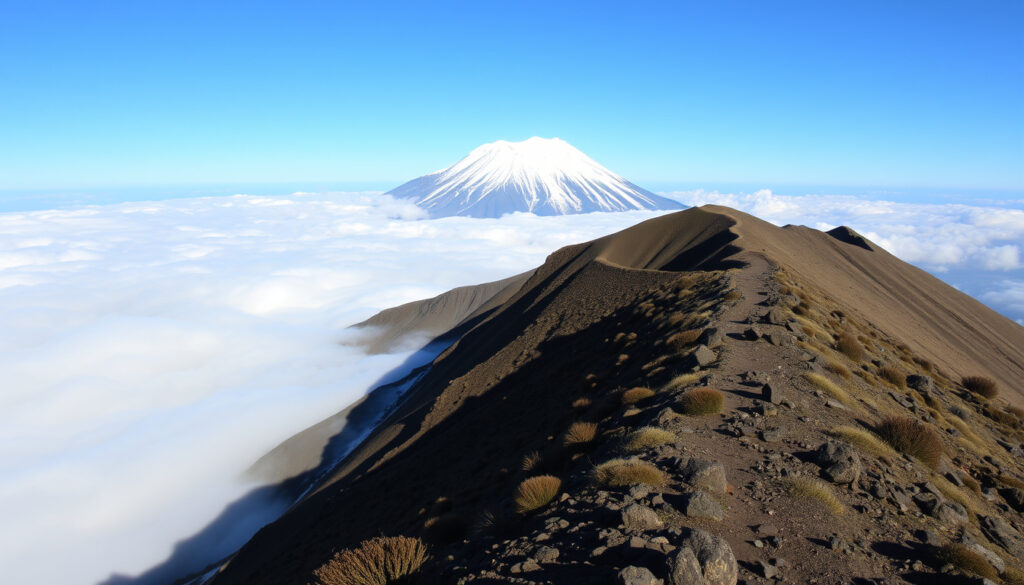
Kilimanjaro Peak: Name, Height, Difficulty & Beginner Guide
Most people who try to climb Kilimanjaro reach the summit — but the ones who don’t often share one mistake: going too fast. Success rates on the mountain range from 65% to 85% depending on the route and duration, according to Global Summit Guide (a trekking resource). Whether you’re planning your first big trek or just curious about Africa’s highest peak, the real story isn’t the height — it’s how your body handles the altitude.
Height: 5,895 m (19,341 ft) ·
Location: Tanzania, Africa ·
First Ascent: 1889 (Hans Meyer & Ludwig Purtscheller) ·
Summit: Uhuru Peak ·
Annual Climbers: ~35,000
Mount Kilimanjaro Guide (route difficulty resource)
Quick snapshot
- Uhuru Peak, 5,895 m (Mount Kilimanjaro Guide)
- Highest point of Kilimanjaro (KiliPeak (route guide))
- Free-standing mountain, not part of a range (Much Better Adventures (adventure travel publisher))
- No technical climbing required (Much Better Adventures)
- Altitude is the main challenge (KiliPeak)
- 65–85% summit success rate (Global Summit Guide)
- Possible with proper training (Cats Safaris (Tanzanian tour operator))
- Easiest routes: Marangu, Rongai (Mount Kilimanjaro Guide)
- 5–9 day treks (KiliPeak)
- Altitude sickness is the top risk (Much Better Adventures)
- Guided trips strongly recommended (Cats Safaris)
- Relatively low fatality rate compared to other high peaks (KiliPeak)
Key facts at a glance
| Attribute | Value |
|---|---|
| Height | 5,895 m (19,341 ft) |
| Location | Tanzania, Africa |
| First Ascent | 1889 |
| Summit | Uhuru Peak |
| Routes | 7 major routes |
| Annual Visitors | ~35,000 |
The pattern is clear: height and location only tell part of the story — the routes and time on the mountain are what actually determine who makes it.
What is the peak of Kilimanjaro called?
The highest point of Kilimanjaro is Uhuru Peak, which sits at 5,895 meters (19,341 feet) above sea level. It’s the goal of every climber who sets foot on the mountain. According to Much Better Adventures (adventure travel publisher), the peak is the highest free-standing mountain in the world — not part of a range.
What does Uhuru Peak mean?
- Uhuru translates to “freedom” in Swahili, a fact noted by Cats Safaris (Tanzanian tour operator).
- It was named after Tanzania’s independence, reflecting the nation’s pride.
Is Uhuru the highest point?
- Yes, Uhuru Peak is the summit of Kibo, the highest of Kilimanjaro’s three volcanic cones (Mount Kilimanjaro Guide).
- No other point on the mountain is higher.
Uhuru Peak is the crown of a free-standing giant. For beginners, reaching it means understanding that the name itself — freedom — comes with a price: time and patience on the ascent.
Is Kilimanjaro a difficult climb?
Technically, no — you don’t need ropes, crampons, or prior mountaineering experience. Much Better Adventures calls it a “walk-up” compared to other peaks. But difficulty comes from the altitude, not the terrain.
What makes Kilimanjaro challenging?
- Altitude: 5,895 m means oxygen pressure is about 50% of sea level (KiliPeak (route guide)).
- Acute Mountain Sickness (AMS) is a real risk; poor acclimatization is the main reason people turn back (Cats Safaris).
- Long days: summit night involves 6–8 hours of hiking in the dark and cold.
How does altitude affect difficulty?
- Routes with more days for acclimatization have higher success rates. For example, the 8-day Lemosho route has about 85% success, while 5-day Marangu drops to 50% (Global Summit Guide).
- Altitude sickness can hit anyone regardless of fitness (Much Better Adventures).
What is the success rate?
- Overall, 65–85% of climbers reach the summit (Global Summit Guide).
- Longer, more gradual routes (Lemosho, Northern Circuit) consistently outperform shorter ones.
The “easy” terrain is deceptive. Many climbers underestimate the altitude and pay for it with a failed summit bid. The real challenge is pacing, not pulling.
Can a beginner climb Kilimanjaro?
Yes, with proper preparation. According to Cats Safaris (Tanzanian tour operator), no technical climbing skills are needed — just a reasonable fitness level and a willingness to walk slowly uphill for several days.
What fitness level is required?
- You should be able to walk 5–10 km per day with a light pack, on uneven terrain (Much Better Adventures).
- Cardiovascular training (hiking, stair climbing, cycling) for 3–6 months is recommended.
What is the easiest route for beginners?
- Marangu is often called the easiest: hut accommodation, steady terrain, 5–6 days (Mount Kilimanjaro Guide).
- Rongai is also beginner-friendly with a gradual ascent and less crowding (KiliPeak).
- But shorter routes mean poorer acclimatization — trade-off between comfort and success.
How should a beginner prepare?
- Train with long hikes, carry a weighted pack, and practice altitude exposure if possible (Cats Safaris).
- Choose a 7–9 day route for the best chance of reaching the peak.
- Book with a reputable operator that includes proper acclimatization days.
A beginner who picks a 5-day Marangu trip faces a 50% success rate. The same beginner on an 8-day Lemosho has an 85% chance. The route choice is the single biggest determinant of success for a first-timer.
How many climbers died in Kilimanjaro?
Death on Kilimanjaro is rare, but it does happen. According to KiliPeak (route guide), the most common causes are altitude sickness, falls, and pre-existing medical conditions. Exact annual figures vary by source, but the fatality rate is relatively low compared to other high-altitude mountains.
What are the main causes of death?
- Altitude sickness (HAPE, HACE) is the leading cause (Much Better Adventures).
- Falls, especially on the descent when climbers are exhausted, account for a smaller portion.
- Heart attacks and other medical emergencies in older climbers.
How does the death rate compare to other mountains?
- Kilimanjaro’s death rate is roughly 0.03% of climbers, far lower than Everest’s 1–2% (Global Summit Guide).
- Most deaths occur on the descent due to altitude-related complications.
Is Kilimanjaro safe?
- For most, yes — with a guided group and proper preparation, the risk is minimal (Cats Safaris).
- The main danger is ignoring symptoms of altitude sickness.
What is harder, Everest or Kilimanjaro?
They are not in the same league. Everest demands technical climbing, extreme cold, and months of commitment. Kilimanjaro is a trek — a long, high-altitude hike. Much Better Adventures sums it up: “Kilimanjaro is a walk, Everest is a climb.”
How does altitude compare?
- Everest: 8,849 m (29,032 ft) — requires supplemental oxygen above 8,000 m.
- Kilimanjaro: 5,895 m — most climbers do not use oxygen, but the thin air still causes AMS (KiliPeak).
- Kilimanjaro’s altitude is roughly 66% of Everest’s, but the lack of acclimatization time on short routes makes it feel harder than it should.
Do you need technical skills for each?
- Kilimanjaro: No technical skills. Ropes, ice axes, and crampons are not needed (Much Better Adventures).
- Everest: Requires advanced mountaineering skills, including crevasse rescue, fixed rope climbing, and ice climbing.
Which has a higher success rate?
- Kilimanjaro: 65–85% (Global Summit Guide).
- Everest: ~30–40% for first-time climbers (with commercial expeditions).
- The difference is mostly due to technical difficulty and extreme weather on Everest.
Kilimanjaro is easier on paper, but its high altitude hits fast. Everest is a mountaineering project that takes years of preparation. They are different sports, not different levels of the same sport.
Route comparison: Which route is best for beginners?
Six major routes, one pattern: the longer the route, the higher the success rate. The table below shows the trade-offs between days, difficulty, and summit odds.
| Route | Days | Difficulty (1–5) | Success Rate | Accommodation |
|---|---|---|---|---|
| Marangu | 5–6 | 2/5 | ~50% (5-day) | Huts |
| Rongai | 6–7 | 3/5 | ~68% (7-day) | Tents |
| Machame | 6–7 | 3/5 | ~75% (7-day) | Tents |
| Lemosho | 7–8 | 3/5 | ~85% (8-day) | Tents |
| Northern Circuit | 8–9 | 3/5 | ~90–95% | Tents |
| Umbwe | 5–6 | 5/5 | ~45–55% | Tents |
Sources: Mount Kilimanjaro Guide (route difficulty ratings), Global Summit Guide (success rates), KiliPeak (route descriptions).
The implication: longer routes nearly double your chance of standing on Uhuru Peak. For a beginner, the extra days are the best investment you can make.
Upsides and downsides of climbing Kilimanjaro
Upsides
- No technical skills required — accessible to most fit people (Much Better Adventures)
- Stunning landscapes: rainforest, moorland, alpine desert, glaciers (Cats Safaris)
- High success rate on longer routes (Global Summit Guide)
- Guided trips provide safety and logistics (KiliPeak)
Downsides
- Altitude sickness is a real risk, even for fit climbers (Much Better Adventures)
- Short routes have poor acclimatization and low success rates (Global Summit Guide)
- Summit night is brutally cold and long (6–8 hours of hiking in the dark)
- Costs can be high ($2,000–$6,000 depending on route and operator)
Steps to prepare for a Kilimanjaro climb
Getting ready for Kilimanjaro is about building endurance, not speed. Follow these steps to boost your odds of reaching Uhuru Peak.
- Train for long, slow hikes: Start 3–6 months before your trip. Walk 5–10 km on hilly terrain with a 10–15 kg pack (Cats Safaris). Include stair climbing or treadmill at a steep incline.
- Choose the right route: Pick a 7–9 day route (Lemosho, Northern Circuit, or Rongai) for proper acclimatization (KiliPeak). Avoid 5-day Marangu or Umbwe if you are a beginner.
- Book a reputable operator: Look for operators that include acclimatization days, emergency oxygen, and certified guides (Cats Safaris). Check reviews on independent platforms.
- Pack wisely: Layers (base, insulating mid-layer, waterproof shell), sleeping bag rated to -10°C, trekking poles, and a headlamp (Much Better Adventures). Don’t forget a pee bottle for summit night — it’s a common tip from experienced climbers.
- Prepare for altitude: Hydrate well (3–4 liters per day) and ascend slowly — “pole pole” (slowly slowly) is the mantra (Much Better Adventures). Consider asking your doctor about acetazolamide (Diamox) to help prevent AMS.
Confirmed facts and what’s unclear
Confirmed facts
- Uhuru Peak is the highest point at 5,895 m (Mount Kilimanjaro Guide)
- Kilimanjaro is located in Tanzania (Much Better Adventures)
- First ascent by Hans Meyer and Ludwig Purtscheller in 1889 (Mount Kilimanjaro Guide)
- Marangu is the only route with hut accommodation (Much Better Adventures)
What’s unclear
- Exact annual death toll varies by source — estimates range from 10 to 30 (KiliPeak)
- Success rates fluctuate with weather and individual fitness; published numbers are averages from operators (Global Summit Guide)
- Some routes like Umbwe have extreme difficulty but limited data on success rates
What climbers say about Kilimanjaro
“The most important thing is to go slowly. We tell our clients ‘pole pole’ from day one. The ones who listen make it to the top.”
— Cats Safaris (Tanzanian tour operator), experienced guide
“I was scared of the altitude, but I trained for six months and chose the Lemosho route. The summit morning was the hardest thing I’ve ever done, but also the most rewarding.”
— Climber testimonial cited in Much Better Adventures (adventure travel publisher)
“Kilimanjaro is a trek, not a climb. But don’t let that fool you — the altitude kills more egos than bodies. Respect it, and you’ll be fine.”
— KiliPeak (route guide), mountaineering writer
For a beginner from the US or Europe, the choice is clear: invest in a longer route, train for months, and go with a certified operator. Shortcuts (5-day Marangu, Umbwe) cut your chances in half. The summit is achievable — but only if you treat altitude as the real opponent, not the trail.
youtube.com, climbing-kilimanjaro.com, tranquilkilimanjaro.com, globalsummitguide.com, muchbetteradventures.com, ascendtanzania.com, openpr.com
Frequently asked questions
How much does it cost to climb Kilimanjaro?
Prices range from $2,000 to $6,000 depending on route, operator, and included services. Longer routes cost more but offer higher success rates. Cats Safaris notes that budget operators often skip acclimatization days.
Which route is best for acclimatization?
The Lemosho and Northern Circuit routes are best because they approach from the west and spend more days at intermediate altitudes. The 8-day Lemosho has an 85% success rate (Global Summit Guide).
Can you see Kilimanjaro from space?
Yes, Kilimanjaro’s glaciers are visible from orbit, but the mountain itself is not always distinguishable without zoom. It’s a popular subject for satellite photography.
What should I pack for a Kilimanjaro climb?
Essentials: layered clothing (base, mid, shell), waterproof boots, sleeping bag rated to -10°C, trekking poles, headlamp, water bottles, and a pee bottle for summit night (Much Better Adventures).
Do I need a guide to climb Kilimanjaro?
Yes, Tanzanian law requires all climbers to be accompanied by a licensed guide. Independent climbing is not permitted (Cats Safaris).
How long do you stay at the summit?
Most climbers spend 15–30 minutes at Uhuru Peak — enough for photos and a moment of reflection before the long descent back to high camp.
Is altitude sickness guaranteed on Kilimanjaro?
No, but it’s common. Up to 50% of climbers experience some form of AMS. Proper acclimatization, hydration, and slow ascent reduce the risk significantly (KiliPeak).
More related posts
 Charlie Cameron: Biography, Wife, Salary & AFL Career
 Book Driving Test Qld – Step-by-Step Booking Guide
 Aaron Pierre: Biography, Career, and Personal Life Facts
 Courteney Cox: Biography, Relationships, Net Worth, and Health
 Pick Up Lines That Work: Rizz, Delivery & Texting Tips
 Alfred Deakin: Australia’s Second Prime Minister and Federation Leader
 Phoenix Suns vs Chicago Bulls Match Player Stats: March 5, 2026 Game Recap
 Sydney to Japan Flights: Cheap Deals, Times & Direct Options