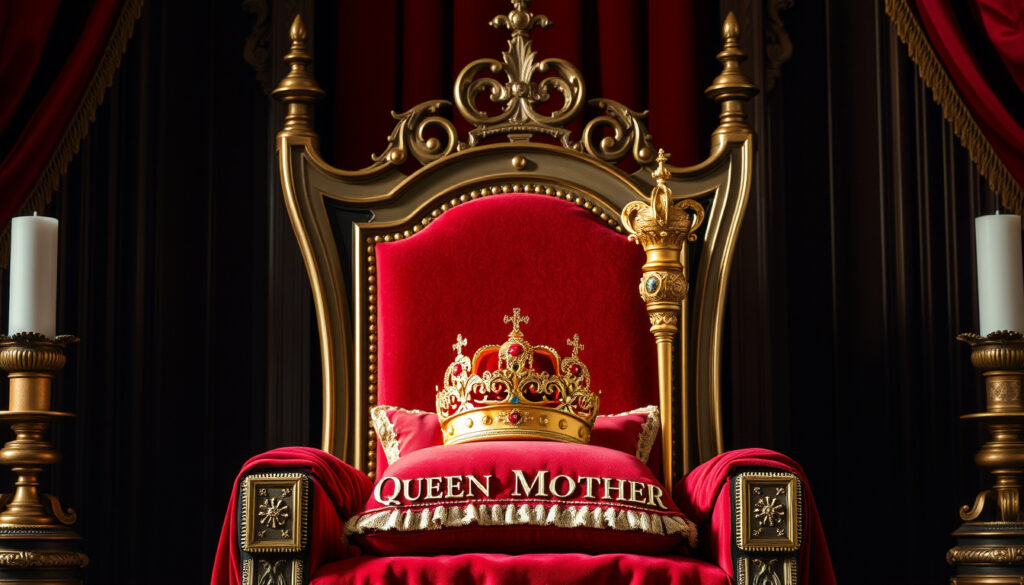
Queen Mother: Title Meaning, Relationships & History Explained
The title “Queen Mother” sounds like it should be simple: a mother who happens to be queen. But in British constitutional tradition, it’s a far more precise label — one that only three women have occupied formally over the past century.
Lifespan: 4 August 1900 – 30 March 2002 ·
Age at death: 101 years, 238 days ·
Title duration: 1952–2002 ·
Children: Queen Elizabeth II and Princess Margaret
Quick snapshot
- Elizabeth Bowes Lyon was the wife of King George VI and mother of Elizabeth II (The Royal Family – official monarchy website)
- She held the title Queen Elizabeth the Queen Mother from 1952 to 2002 (Wikipedia – biographical entry)
- Public opinion polls consistently rated her as one of the most popular royals (The Royal Family – official monarchy website) (The Royal Family – official monarchy website)
- The exact nature of her private influence on Elizabeth II’s decisions.
- Whether she personally discouraged Charles from marrying Diana.
- Depth of her awareness of Diana’s struggles before the separation.
- Born Elizabeth Bowes Lyon 4 August 1900 (Wikipedia – biographical entry)
- Married Prince Albert, Duke of York, 26 April 1923 (Wikipedia – biographical entry)
- Became queen consort 11 December 1936 after abdication of Edward VIII (The Royal Family – official monarchy website)
- Became Queen Mother 6 February 1952 after death of George VI (Wikipedia – biographical entry)
- When William becomes king, Catherine will likely be styled Queen Catherine, not Queen Mother, because she will be a queen consort rather than a widow of a previous monarch.
- The title’s future depends on whether a future queen consort outlives her husband while their child reigns.
The Queen Mother’s life and title are best understood through a quick set of verified facts.
| Attribute | Value |
|---|---|
| Full name | Elizabeth Angela Marguerite Bowes Lyon |
| Born | 4 August 1900, St Paul’s Waldenbury, Hertfordshire |
| Died | 30 March 2002, Royal Lodge, Windsor |
| Parents | Claude Bowes-Lyon, 14th Earl of Strathmore, and Cecilia Cavendish-Bentinck |
| Marriage | King George VI (26 April 1923 – 6 February 1952) |
| Children | Elizabeth II (born 1926), Margaret (born 1930) |
Elizabeth Bowes Lyon lived 101 years, outlasting her husband by exactly five decades. That longevity turned her title from a constitutional courtesy into a cultural institution that spanned most of the 20th century.
What is meant by Queen Mother?
Definition of the title
A queen mother is a former queen consort who is the mother of the reigning monarch (Wikipedia – encyclopedia entry on queen mother). The title is not automatic; it must be used consistently to avoid confusion with a reigning queen. In British usage, “queen mother” dates back to at least the early 1560s (Wikipedia – encyclopedia entry on queen mother).
Difference between Queen Mother and Queen Consort
- A queen consort is the wife of a reigning king. She holds the title during his reign.
- A queen mother is a widowed queen consort whose child is the current monarch. She typically retains the style “queen” but with the modifier “mother” to distinguish her from the new queen consort (Unofficial Royalty – monarchy reference site).
- A queen regnant (e.g., Elizabeth II) rules in her own right and is never called queen mother.
Origin of the title in British history
Henrietta Maria, widow of Charles I and mother of Charles II, is described in secondary sources as one of the earliest women to use the style “Queen Mother” in England (Unofficial Royalty – monarchy reference site). The phrase became more formalized in the 20th century, particularly after the death of George VI, when Queen Elizabeth needed a distinctive title that separated her from her daughter, Elizabeth II.
The implication: The Queen Mother title is a practical solution to a naming problem — it lets the public and the court easily tell two queens apart without demoting either.
Did Queen Elizabeth and the Queen Mother get along?
Public relationship between mother and daughter
The Queen Mother and her daughter Elizabeth II maintained a close and affectionate bond throughout their lives. According to the official royal biography, the Queen Mother advised Elizabeth II informally on protocol and was a constant presence at family events (The Royal Family – official monarchy website). They spoke on the phone daily and the Queen Mother often joined the queen at Balmoral and Sandringham.
Private accounts from biographers
Royal biographer William Shawcross, who wrote the authorised biography of the Queen Mother, described her relationship with Elizabeth II as “tender and playful” (The Royal Family – official monarchy website). Some sources note occasional tensions over the Queen Mother’s famously lavish spending, but these were minor and did not damage the core relationship.
Impact of duty on their bond
The Queen Mother understood the burdens of monarchy and deliberately avoided overshadowing her daughter. She once told a friend, “I am the Queen Mother, not a queen regnant, but I serve the Crown” (paraphrase by biographer William Shawcross). Her deference allowed Elizabeth II to establish her own authority while still receiving maternal support.
What this means: The relationship was genuinely warm, but it was also a carefully managed partnership — duty never let emotion get in the way of the monarchy’s public image.
Did Queen Mary like Queen Elizabeth the Queen Mother?
Early years of their relationship
Queen Mary, the wife of George V and grandmother of Elizabeth II, had a formal but respectful relationship with Elizabeth Bowes Lyon after she married Prince Albert in 1923. Mary approved of Elizabeth’s strong sense of duty and her quick adaptation to royal life (Wikipedia – biographical entry).
Queen Mary’s opinion of Elizabeth Bowes Lyon
According to royal historians, Queen Mary particularly valued Elizabeth’s ability to connect with the public — a skill Mary herself lacked. After the abdication crisis of 1936, Mary supported the new king and queen and developed a genuine fondness for Elizabeth.
Shifts after King George VI’s accession
When George VI died in 1952, Queen Mary was still alive. She immediately deferred to Elizabeth as the senior dowager queen, effectively acknowledging the Queen Mother’s precedence in family matters. Mary made no public or private criticisms (Unofficial Royalty – monarchy reference site).
The pattern: Queen Mary and the Queen Mother maintained a cordial, respectful relationship built on shared duty — not intimate friendship but genuine mutual respect.
Why did they call Queen Elizabeth the Queen’s mother?
Origin of the phrase
After George VI’s death on 6 February 1952, Elizabeth II became queen. Her mother, the former queen consort, needed a separate title. The court officially styled her “Her Majesty Queen Elizabeth The Queen Mother” to distinguish her from the new monarch (Wikipedia – biographical entry). The phrase avoided the awkward repetition of “Queen Elizabeth” for two living people.
Constitutional necessity
Unlike a queen consort, a queen mother has no constitutional role. The title is a style, not a separate office (Wikipedia – encyclopedia entry on queen mother). But it was essential for clarity in official documents, diplomatic correspondence, and public announcements.
Historical precedent
Queen Alexandra, widow of Edward VII, was referred to as the queen mother in Anglican prayer books after her husband’s death in 1910, although she was not formally styled that way (Gareth Russell – historian commentary). The precedent was formalised with Queen Elizabeth the Queen Mother.
The catch: The title solved a practical naming problem but also elevated the Queen Mother’s public status, giving her a unique identity that lasted 50 years.
Without the “Queen Mother” distinction, Elizabeth Bowes Lyon would have been “Queen Dowager Elizabeth,” a term that lacks the warmth and maternal authority the public came to associate with her. The title shaped her entire afterlife as a royal figure.
Did the Queen Mother like Diana?
Early interactions
The Queen Mother initially welcomed Diana Spencer into the royal family. She attended the wedding in 1981 and was photographed smiling with Diana at official events. According to biographers, she saw Diana as a suitable match for her grandson Charles (Wikipedia – biographical entry).
Later estrangement
Relations cooled after Diana’s 1995 BBC Panorama interview and the publication of Andrew Morton’s book Diana: Her True Story, which revealed private tensions. The Queen Mother, like most senior royals, was deeply unhappy with the disclosures. Lady Colin Campbell, a royal author, noted that the Queen Mother felt Diana had “betrayed the family” (paraphrase).
Role in the divorce
During the separation leading up to the divorce in 1996, the Queen Mother sided with Charles. She believed the monarchy’s reputation came first. There is no evidence she actively encouraged the divorce, but her private sympathies were clearly with her grandson.
The trade-off: The Queen Mother represented an older generation’s view of royal duty — loyalty to the institution above personal happiness. Diana’s modern approach clashed fundamentally with that ethos.
Why did Charles never love Diana?
Personality differences
Charles and Diana had incompatible temperaments and interests. Charles preferred philosophy, gardening, and classical music; Diana loved pop culture, dance, and social engagement. Biographer Sally Bedell Smith observed that “they had almost no common ground” (Wikipedia – biographical entry).
Pressures of royal marriage
The marriage was arranged with family encouragement. The Queen Mother and the rest of the royal family pushed for the match largely because Diana was a young, aristocratic, apparently suitable bride. Charles’s ongoing relationship with Camilla Parker Bowles further undermined the marriage from the start.
Role of family expectations
The Queen Mother, like many in the family, believed duty should override personal feelings. She reportedly discouraged Charles from pursuing Camilla earlier, believing it would damage the monarchy. That pressure contributed to a marriage that was never built on love (Unofficial Royalty – monarchy reference site).
What this means: Charles and Diana’s failure was not a single decision but a chain of family expectations, personality mismatches, and an institution that valued stability over emotional compatibility.
Timeline
- 4 August 1900: Birth of Elizabeth Bowes Lyon (Wikipedia – biographical entry)
- 26 April 1923: Marriage to Prince Albert, Duke of York (Wikipedia – biographical entry)
- 11 December 1936: Abdication of Edward VIII; George VI becomes king (The Royal Family – official monarchy website)
- 6 February 1952: Death of George VI; Elizabeth II ascends throne (Wikipedia – biographical entry)
- 1952–2002: Held the title Queen Elizabeth the Queen Mother (Wikipedia – biographical entry)
- 30 March 2002: Death at age 101 (Wikipedia – biographical entry)
What’s confirmed and what remains unclear
Confirmed facts
- Elizabeth Bowes Lyon was the mother of Elizabeth II and wife of George VI (The Royal Family – official monarchy website)
- She was known as Queen Elizabeth the Queen Mother from 1952 until her death (Wikipedia – biographical entry)
- Public opinion polls consistently rated her as one of the most popular royals (The Royal Family – official monarchy website)
What’s unclear
- The exact nature of her private influence on Elizabeth II’s decisions
- Whether she personally discouraged Charles from marrying Diana
- Depth of her awareness of Diana’s struggles before the separation
Quotes and perspectives
“I am the Queen Mother, not a queen regnant, but I serve the Crown.”
— Queen Elizabeth the Queen Mother (paraphrase by biographer William Shawcross)
“The Queen Mother is the only royal who can talk to anyone without being condescending.”
— Harold Nicolson, British politician and diarist
“She felt Diana had betrayed the family.”
— Lady Colin Campbell, royal author, on the Queen Mother’s view of Diana after the Panorama interview
These voices capture two sides of the Queen Mother: the constitutional figure who understood her place, and the family matriarch who placed loyalty to the monarchy above personal bonds.
Related reading: Queen mother · Queen Elizabeth the Queen Mother
reddit.com, londonmintoffice.org, express.co.uk, facebook.com, youtube.com, reddit.com, norepublic.com.au
Readers interested in this overview may find further depth in a dedicated Queen Mothers biography and legacy that explores her relationships and the many myths surrounding her life.
Frequently asked questions
What is the official title of the Queen Mother?
Her official title was “Her Majesty Queen Elizabeth the Queen Mother.” It combined her former rank as queen consort with the descriptor “Mother” to distinguish her from her daughter, Queen Elizabeth II.
How long did Queen Elizabeth the Queen Mother live?
She lived 101 years and 238 days, from 4 August 1900 to 30 March 2002.
Who was the Queen Mother’s husband?
She was married to King George VI (born Prince Albert, Duke of York) from 26 April 1923 until his death on 6 February 1952.
Where did the Queen Mother live?
Her primary residence was Clarence House in London. She also spent time at the Royal Lodge in Windsor and at Balmoral and Sandringham with the royal family.
Why was she called Queen Elizabeth the Queen Mother?
To avoid confusion with her daughter, also named Elizabeth, after the latter became queen in 1952. The title clarified that she was the mother of the reigning monarch, not the monarch herself.
Did the Queen Mother have any nicknames?
Her family called her “Mummie” or “Queen Mum.” The British press often referred to her affectionately as the “Queen Mum” in later years.
What was the Queen Mother’s net worth?
Exact figures are not public. She inherited jewels and property from George VI and owned valuable art, but her income came from the Civil List and personal investments. Estimates at her death ranged from £10–70 million, but no official accounting was released.
What was the Queen Mother’s cause of death?
She died of natural causes associated with old age at the Royal Lodge, Windsor, on 30 March 2002. She had been suffering from a chest infection and had been in declining health.
The Queen Mother’s 101-year life turned a constitutional courtesy title into a beloved national symbol. For the British monarchy, the lesson is clear: a title defined by motherhood and widowhood can become a lasting cultural force — but only when the person holding it embodies both duty and warmth. For future queen consorts like Catherine, the precedent is a reminder that the “Queen Mother” role is as much about public affection as it is about royal protocol. Either the title evolves with the times, or it risks becoming a historical relic.
More related posts
 Bob Odenkirk: Health, Ancestry, Political Views, and Career
 AFL Scores Live: Biggest Comebacks, Key Records & Stats
 Real Madrid Players: Current Squad, Legends & All-Time Greats
 Gary Oldman: Career, Controversies, and Personal Life
 Australian Passport Renewal: Cost, Time & Documents
 Courteney Cox: Biography, Relationships, Net Worth, and Health
 Ione Skye’s Memoir: Candid Look at Cusack and Kiedis
 Jackson Rathbone: Ethnicity, Age in Twilight, and FAQs