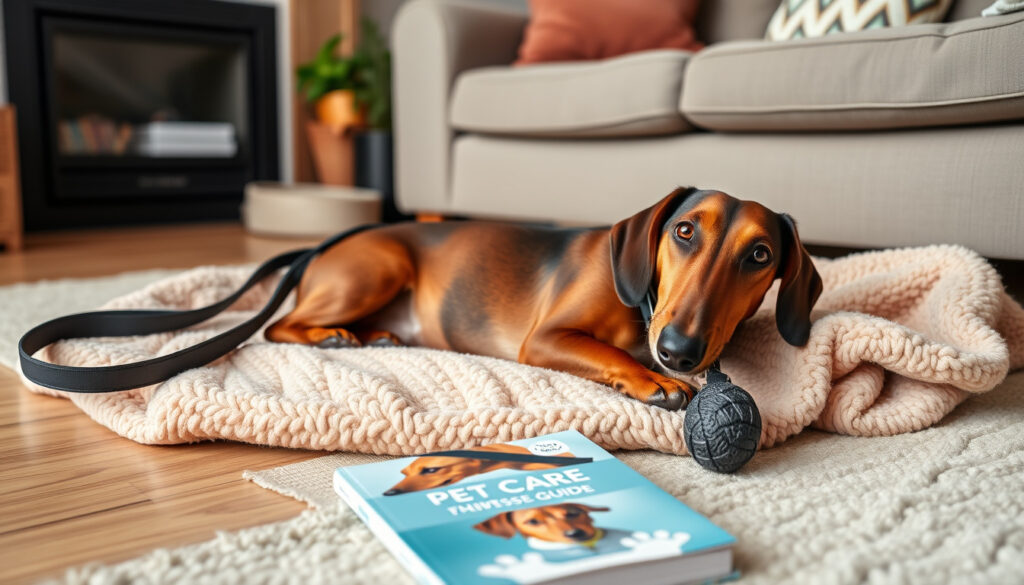
Are Sausage Dogs Good Pets? Pros, Cons, and Care Guide
Anyone who has ever seen a Dachshund trotting along on short legs knows why they’re called sausage dogs, but behind that playful nickname lies a determined hunting breed with a surprisingly complex set of needs. This guide walks through everything a prospective owner in Ireland should consider — from temperament and health risks to the real cost of bringing one home.
Height (Standard): 8–9 inches at shoulder ·
Weight (Standard): 16–32 lbs ·
Life Expectancy: 12–16 years ·
Temperament: Stubborn, Loyal, Playful ·
Coat Types: Smooth, Longhair, Wirehair ·
Country of Origin: Germany
Quick snapshot
- Dachshund means “badger dog” in German (Agria Ireland (pet insurer))
- Developed in Germany at least 600 years ago (American Kennel Club (breed authority))
- Prone to intervertebral disc disease (IVDD) (Agria Ireland)
- Average lifespan 13–15 years per Irish insurer data (Agria Ireland)
- Exact century of first breeding (Wikipedia (encyclopaedia))
- Precise origin of the name “Dachshund” (likely from “Dachs” and “Hund”) (Wikipedia)
- Whether the breed originated from crossing a small hound with a terrier (AKC history page)
- Breed established in Germany by the 15th century (Wikipedia)
- Brought to the UK in the 1840s (The Kennel Club (UK))
- First standardised in the 1870s by German breeders (AKC history)
- More Irish breeders are adopting health screening for IVDD (Irish Kennel Club (official registry))
- Rescue demand rising; groups like Dogs Trust Ireland report steady intake (Dogs Trust Ireland (charity))
Six key breed facts, one pattern: the Dachshund is a compact dog with a big personality — and a big health warning attached.
| Attribute | Value |
|---|---|
| AKC Group | Hound |
| Height (Standard) | 8–9 inches (20–23 cm) |
| Weight (Standard) | 16–32 lbs (7–15 kg) |
| Life Span | 12–16 years |
| Origin | Germany |
| Temperament | Stubborn, Loyal, Playful |
Why Is It Called a Sausage Dog?
The name is as visual as it gets. Dachshunds have a long, low-slung body and short legs — exactly the shape of a sausage. In German, the breed’s official name is Dachshund, which translates to “badger dog.” That’s no coincidence: they were developed in Germany to hunt badgers and other burrow-dwelling animals (Agria Ireland (pet insurer)).
In the British Isles and Australasia, the nickname “sausage dog” is common. In the US and Canada, they’re often called “wiener dogs.” The AKC standard notes that the breed’s elongated body and short legs were deliberately bred to allow the dog to enter tunnels and fight badgers underground (American Kennel Club (breed authority)).
That same body shape that earns the nickname also makes the breed vulnerable to serious spinal injuries. The long back is a structural trade-off, not just a cute feature.
Breed standard at a glance
Two sizes, three coat types, and a surprising range of colours — the Dachshund is far from a one‑look dog.
| Feature | Standard | Miniature |
|---|---|---|
| Weight | 16–32 lbs | 11 lbs & under |
| Height at shoulder | 8–9 inches | 5–6 inches |
| Coat types | Smooth, Longhair, Wirehair | Same |
| Colours | Red, black & tan, chocolate, dapple | Same |
| AKC group | Hound | Hound (class division) |
The implication: size matters for suitability. Miniatures are lighter and easier to carry, but both sizes share the same back risks.
Is a Sausage Dog a Good Pet?
It depends on your lifestyle. Dachshunds are loyal, playful, and brave — but they can also be stubborn and prone to barking. They form strong bonds with their owners and often enjoy cuddling, but they need early socialisation to get along with children and other pets (AKC breed profile).
What is the temperament of a Dachshund?
- Brave and curious — originally a hunting dog, still has a strong prey drive
- Loyal and affectionate with family, but can be wary of strangers
- Stubborn streak makes training a challenge; positive reinforcement works best
Dachshunds are described by the Irish Kennel Club (official breed registry) as having distinct coat varieties and sizes, including long‑haired, smooth‑haired, wire‑haired, miniature, and kaninchen types. Each coat type has a slightly different temperament: wirehairs are often more outgoing, smooths more classic, longhairs more calm.
Is a Dachshund a good house dog?
Yes — they adapt well to apartment living if exercised properly. They are clean indoors and don’t need a large garden. However, their barking can be a nuisance in close quarters. The AKC notes they make excellent watchdogs, which means they will alert you to every visitor, delivery, or leaf.
Do Dachshunds like to be cuddled?
Most do. They are known for forming strong attachments and will happily curl up on your lap. But they can be possessive of their owners. Crate training and alone-time practice from puppyhood help prevent separation anxiety.
Irish owners should be aware that Dachshunds can be difficult to housetrain. Patience and consistency are essential — and a ground-floor apartment with easy garden access is a big help.
What Are the Pros and Cons of Dachshunds?
Let’s lay out the upsides and downsides side by side.
Upsides
- Affectionate and loyal — forms strong bonds with owners
- Compact size suits apartments and small homes
- Brave — excellent watchdog despite small stature
- Playful and entertaining personality
- Three coat types offer variety for grooming preferences
Downsides
- Prone to back problems (IVDD) — can be expensive to treat
- Stubborn — training requires patience
- Digging instinct — will ruin gardens
- Barking — can be excessive if not trained
- Separation anxiety — cannot be left alone for long hours
What is the downside of a Dachshund?
The most serious downside is the health risk. Agria Ireland (pet insurer) lists herniated disc and back pain as common issues. Intervertebral disc disease (IVDD) can lead to paralysis and surgery costing thousands of euros. Obesity makes it worse — overweight Dachshunds are far more likely to suffer back problems.
Beyond health, the breed’s stubbornness and barking can be frustrating. They are not a “beginner’s dog” — first‑time owners often struggle with training. The catch: if you don’t have the patience for consistent training, a Dachshund may not be the right fit.
How Many Walks Does a Dachshund Need?
Moderate exercise is key — about 30 to 60 minutes of daily walking. Because of their long backs, off‑leash running on uneven terrain is risky. Always use a harness, not a collar, to protect the neck and spine (AKC health advice).
- Two 15‑ to 30‑minute walks per day is ideal
- Avoid stairs and jumping on/off furniture
- Mental stimulation (puzzle toys, scent games) is just as important
- Prone to obesity — measure food portions carefully
Can a Dachshund be left alone for 8 hours?
Not recommended. Dachshunds are prone to separation anxiety and can become destructive. Dogs Trust Ireland (charity) advises that adult dogs should not be left alone for more than 4–6 hours. Puppies need even shorter intervals. If you work full‑time, consider doggy day care (€10–€35 per day in Ireland) or a dog walker.
Irish owners with demanding jobs face a real cost: dog walking or day care can add €200–€700 per month to ownership expenses. That’s on top of food, vet bills, and insurance.
The implication: a Dachshund is not a dog you can leave at home all day. If you cannot arrange midday care, consider a more independent breed.
What Not to Do With a Dachshund?
This breed has clear dos and don’ts, largely dictated by its spine.
- Don’t let them jump on/off furniture. Use ramps instead. IVDD risk is real.
- Don’t overfeed. Extra weight strains the back. Agria Ireland warns that obesity is a major trigger for disc problems.
- Don’t leave unsupervised with very young children. The breed can be nippy if startled or possessive.
- Don’t skip training. Their stubbornness will win if you’re inconsistent.
- Don’t ignore the barking. Manage it with positive reinforcement, not punishment.
Do Dachshunds bark a lot?
Yes, they are known for it. Bred as hunting dogs, they use their voice to alert. AKC notes they are excellent watchdogs — which means they will bark at anything they consider a threat (or a squirrel). Early training and socialisation can reduce excessive barking, but it will never disappear entirely.
The pattern: Dachshund ownership is a constant negotiation between the dog’s instincts and your home environment. The catch is that you can’t train away a breed’s core nature — you can only manage it.
Clarity: What’s confirmed vs. what’s unclear
Confirmed facts
- Dachshund means “badger dog” in German (Agria Ireland)
- Developed in Germany at least 600 years ago (AKC)
- Nicknamed sausage dog because of elongated body (AKC history)
- Prone to back problems (IVDD) — a serious health risk (Agria Ireland)
- Average lifespan 13–15 years per Irish data (Agria Ireland)
- Standard size: 16–32 lbs; miniature: 11 lbs and under (AKC breed standard)
What’s unclear
- Exact century of first breeding (Wikipedia)
- Precise origin of the name “Dachshund” (Wikipedia)
- Whether the breed originated from crossing a small hound with a terrier (AKC history)
- Exact number of active breeders in Ireland (estimated 15–20) (Ireland Bulletin)
Quotes from experts and resources
“Dachshunds are described as having a distinct coat and size variety, including long‑haired, smooth‑haired, wire‑haired, miniature, and kaninchen types.”
“The Dachshund is a German breed originally developed for hunting small game, including below‑ground work.”
— Agria Ireland (pet insurance provider)
“Standard Dachshunds usually weigh between 16 and 32 pounds, with miniatures at 11 pounds and under at 12 months and older.”
“Dog walking or doggie day care can cost €10–€35 per day when needed.”
What sausage dog ownership costs in Ireland
Buying a Dachshund puppy in Ireland typically costs between €800 and €1,800, with Agria Ireland quoting €800–€1,200 and Ireland Bulletin (lifestyle publication) reporting €1,200–€1,800. Miniature Dachshunds can be found for around €950 from breeders in Kildare and Dublin (Dogs For Sale Ireland (marketplace)).
Ongoing annual costs run between €1,450 and €2,700 per year, according to DogDays.ie (Irish cost calculator), excluding initial purchase, vaccinations, microchipping, and neutering. Dogs Trust Ireland estimates the average at €1,600 per year. A dog licence costs €20 per year, and all dogs must be microchipped (PetCost.ie (Irish pet cost resource)).
Rescue adoption is a cheaper and kinder option. Dogs Trust Ireland and local rescue groups often have Dachshunds and Dachshund mixes. Adoption fees are much lower than breeder prices, and the dog is usually already vaccinated and neutered.
For Irish owners, the decision is clear: a Dachshund offers a huge personality in a small package, but the back health risks and ongoing costs mean you need to be financially and emotionally prepared. If you can provide the care they need, you’ll have a loyal friend for life. If not, consider a breed with fewer health vulnerabilities.
Frequently asked questions
Do Dachshunds like to be cuddled by strangers?
Dachshunds are generally affectionate with their owners but can be reserved around unfamiliar people. Early socialisation helps them accept cuddles from trusted visitors.
Do Dachshunds bark more than other breeds?
Yes, their hunting background makes them more vocal than average. They bark at intruders, noises, and small animals. Consistent training can reduce nuisance barking.
Can a Dachshund be left alone with a dog walker visit?
With a midday dog walker visit, an adult Dachshund can manage 6–8 hours alone. Without a break, 4–6 hours is the limit. Puppies need more frequent attention.
What is the most expensive downside of a Dachshund?
The biggest financial risk is IVDD surgery, which can cost several thousand euros. Pet insurance premiums for Dachshunds are higher due to this breed-specific risk.
Is a Dachshund a good house dog for families with children?
Dachshunds can live happily with older, respectful children but may nip if startled or possessive. Supervision is essential with toddlers. They bond best with calm households.
How do you pronounce Dachshund?
In English, it’s typically pronounced “DAKS-hund” or “DACKS-und”. The German pronunciation is “DAHKS-hoont”.
More related posts
 Chase Demoor: Boxing Record, Net Worth, and Why He’s Famous
 $30 Million Powerball Winner – Latest Status and Facts
 NSW Public Holidays 2025: Complete List and Dates Guide
 Alex Fine: Career, Bull‑Riding, Acting & Fitness Journey
 What Happened to Yahoo Serious? Real Name & 2026 Update
 Phoenix Suns vs Chicago Bulls Match Player Stats: March 5, 2026 Game Recap
 Pottery Barn Brand Overview: Ownership & Luxury Status
 Shane Withington Age, Wife, Retirement & Home and Away Career