Basque Cheesecake Recipe – Easy Step-by-Step Guide
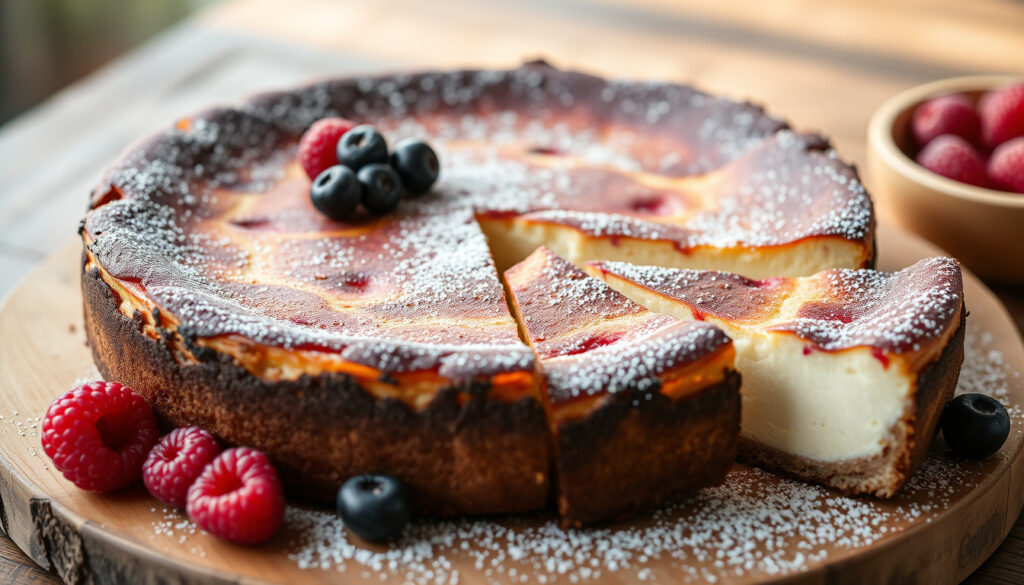
Basque burnt cheesecake brings together an unusual combination of ingredients and an unconventional baking technique to produce one of the most distinctive desserts of recent decades. The result is a crustless cake with a dramatically caramelized top sitting above a custard-like center that wobbles gently when done.
The recipe originated in the Basque region of Spain and has since spread across home kitchens worldwide. Unlike conventional cheesecakes that rely on gentle heat and water baths, this version embraces extreme temperatures to create its signature appearance.
This guide walks through everything needed to make Basque cheesecake at home, from selecting ingredients to storage tips. The technique has become a staple for home bakers seeking impressive results with minimal effort.
What Is Basque Cheesecake?
Key Insights
- No crust or water bath needed
- High-heat baking creates the signature burnt top
- Custard-like, gooey center texture
- Requires only 5-6 core ingredients
- Resting at room temperature improves final texture
Quick Facts
| Attribute | Details |
|---|---|
| Origin | La Viña, San Sebastián, 1990s |
| Also Known As | San Sebastian cheesecake, tarta de queso |
| Key Technique | High temp + parchment sling |
| Calories per slice | Approximately 400 |
| Storage | 5 days refrigerated |
| Baking Temperature | 191-220°C |
Basque Cheesecake Ingredients
The foundation of an authentic Basque cheesecake rests on quality ingredients that create the characteristic contrast between the caramelized exterior and creamy interior. Understanding each component helps bakers make informed substitutions while maintaining the dessert’s distinctive character.
Traditional Recipe
The traditional version relies on straightforward dairy ingredients. Cream cheese forms the base, while heavy cream adds richness. Eggs provide structure, and a small amount of flour acts as thickener.
A traditional La Viña-style recipe calls for approximately 500g of room-temperature cream cheese, 375ml of thickened cream, 5 eggs, 335g of raw sugar, 40g of plain flour, 2 teaspoons of vanilla extract, and a pinch of salt.
Vegan and Gluten-Free Adaptations
Vegan versions replace dairy and eggs with plant-based alternatives while maintaining similar texture. Silken tofu provides the creamy base, and coconut milk or vegan cream adds richness.
For a vegan adaptation, 600g of silken tofu combines with 400ml of vegan cream, 230g of sugar, 70g of cornstarch, 1 teaspoon of vanilla extract, 2 teaspoons of orange extract, and 1 tablespoon of orange zest. Cornstarch replaces flour, making the recipe naturally gluten-free.
Ingredient Substitutions
- Tofu: Silken varieties only for proper creaminess; firm tofu won’t work
- Cream: Coconut milk or vegan double cream as alternatives
- Sugar: Raw or caster sugar works well
- Thickener: Cornstarch and cornflour function identically
- Flavor: Vanilla and orange extracts offer classic taste; citrus zest adds freshness
Always use room-temperature ingredients when blending. Cold components create lumps that won’t smooth out during baking, resulting in an uneven texture.
How to Make Basque Cheesecake Step by Step
Mastering Basque cheesecake requires understanding the relationship between heat, time, and texture. The high-temperature approach distinguishes this recipe from traditional methods, producing results that would be considered errors in other contexts but are essential here.
Equipment and Preparation
A standard 20cm springform pan serves traditional recipes, while 7.5 to 8-inch pans work for vegan versions. The pan requires double lining with parchment paper, scrunched to create overhang extending above the edges.
This parchment sling serves a practical purpose: it replaces the need for a crust while preventing leaks during high-heat baking. The dramatic visual presentation relies on the parchment to create the characteristic rustic appearance.
Oven Method
Preheat the oven to 200°C with a baking tray or sheet placed inside for 45 to 60 minutes. This hot tray ensures even browning across the surface and prevents the bottom from baking too slowly.
Blend all ingredients until completely smooth, ensuring sugar has fully dissolved. Pour the batter into the lined pan, filling it to three-quarters capacity. Place directly on the heated tray and bake for 50 to 55 minutes until the top reaches a deep brown color.
Air Fryer Method
Air fryers offer a convenient alternative for smaller batches. Preheat to 180°C for 5 minutes, then bake at 191°C for approximately 25 to 35 minutes depending on the model.
The air fryer fits a 20cm pan and produces consistent results with the characteristic dark crust. Times may vary slightly between different air fryer models, so monitoring the cheesecake during the final minutes helps achieve the desired level of caramelization.
Small Batch Adaptations
Halving the ingredients and using a 4 to 6-inch pan or ramekins creates individual portions. Reduce baking time by 10 to 20 minutes and check for the signature jiggle to determine doneness.
Resist the urge to open the oven during baking. The dramatic temperature shift can cause the center to sink unevenly, disrupting the desired custard-like consistency.
Cooling and Setting
Allow the cheesecake to cool at room temperature for one hour after removing from the oven. The center will appear loose but firms during refrigeration. This resting period allows the texture to stabilize throughout.
Cover and refrigerate for 8 to 12 hours, preferably overnight. Once fully chilled, unmold by lifting the parchment sling, peel away the paper, and slice with a sharp knife dipped in hot water between cuts for clean portions.
Why Is Basque Cheesecake Burnt?
The dark, caramelized top is not a baking mishap but rather the defining characteristic of the recipe. High temperatures—typically between 191°C and 220°C—create the Maillard reaction that produces the distinctive bitter-sweet caramelization.
This intentional burning differs from overbaking because the goal is specifically to achieve that deeply colored crust while maintaining a liquid center. The contrast between the slightly charred exterior and the creamy interior defines the Basque cheesecake experience.
Serving and Storage Recommendations
Basque cheesecake shines when served at room temperature, allowing the center to soften slightly and release its custard-like character. Removing it from the refrigerator 30 to 45 minutes before serving produces the best texture.
The dessert keeps well refrigerated for up to five days, though the top may lose some of its dramatic appearance over time. Wrapping tightly in plastic wrap or storing in an airtight container helps maintain freshness. Freezing is possible but may alter the delicate center texture upon thawing.
Troubleshooting Common Issues
Several factors can affect the final result. If the top browns too quickly without fully setting, the oven may run hot—consider reducing temperature by 10°C while extending baking time. If the center remains too liquid after the recommended baking period, additional time in 5-minute increments usually resolves the issue.
Sinking in the center typically indicates either overmixing, which introduces excess air, or opening the oven door prematurely. Ensuring all ingredients blend smoothly without excessive incorporation of air helps maintain the structure. A water bath is unnecessary and counterproductive for this particular style.
Final Notes
Basque cheesecake represents a departure from conventional baking wisdom, proving that deliberate high-heat exposure can produce exceptional results when approached correctly. The recipe’s simplicity—few ingredients, no special equipment beyond a springform pan—makes it accessible to bakers of all experience levels.
Whether following the traditional dairy version or exploring vegan adaptations, the essential principles remain unchanged: embrace the heat, trust the process, and allow sufficient time for the cheesecake to set properly. The result is a show-stopping dessert that rewards both the ambitious home baker and the curious newcomer to specialty desserts.
Frequently Asked Questions
What makes Basque cheesecake different from regular cheesecake?
Basque cheesecake differs primarily in its baking approach. Rather than gentle heat with a water bath, it uses extremely high temperatures to create a caramelized, burnt-looking top while maintaining a custard-like, almost liquid center. It also has no crust, setting it apart from traditional cheesecakes.
Can Basque cheesecake be made vegan?
Yes, vegan adaptations work well by substituting silken tofu for cream cheese and coconut milk or vegan cream for dairy cream. Cornstarch replaces flour for gluten-free versions. The result maintains the characteristic texture and appearance while accommodating dietary restrictions.
How do I know when Basque cheesecake is done?
The cheesecake is ready when the top has reached a deep brown to burnt color, and the center still wobbles slightly when the pan is gently shaken. Unlike traditional cheesecakes, it should not be fully set in the middle. The total baking time typically ranges from 50 to 60 minutes at 220°C.
Why did my Basque cheesecake sink in the middle?
Sinking typically results from opening the oven door during baking, which causes a dramatic temperature shift, or from overmixing the batter, which introduces excess air. Both factors disrupt the delicate structure. Preventing oven door opening and blending ingredients just until smooth helps avoid this issue.
How should Basque cheesecake be stored?
The cheesecake keeps refrigerated for up to five days in an airtight container. For best results, bring it to room temperature 30 to 45 minutes before serving. Freezing is possible but may alter the delicate center texture.
What temperature should Basque cheesecake be baked at?
Baking temperatures range from 191°C to 220°C depending on the recipe and desired level of caramelization. Traditional recipes typically call for 220°C, while some variations suggest starting at 200°C or using 191°C in air fryers. Higher temperatures produce the signature burnt appearance more quickly.
More related posts
 Bernard Fanning: Life, Career, Net Worth & Music Now
 Jennifer Hudson: Tragedy, Relationships, Custody, and Career
 Chinese New Year 2026: Fire Horse Dates & Traditions
 Defiant Australian Family Sells Property for $4M After 40 Years
 Bernie Mac’s Cause of Death: Sarcoidosis & Pneumonia
 Roy Keane: Net Worth, Daughter’s Wedding, Beckham & Carrick
 Gmail Sign Up: How to Create a New Account Step by Step
 Max King Injury Update: What Happened & How Long Is He Out