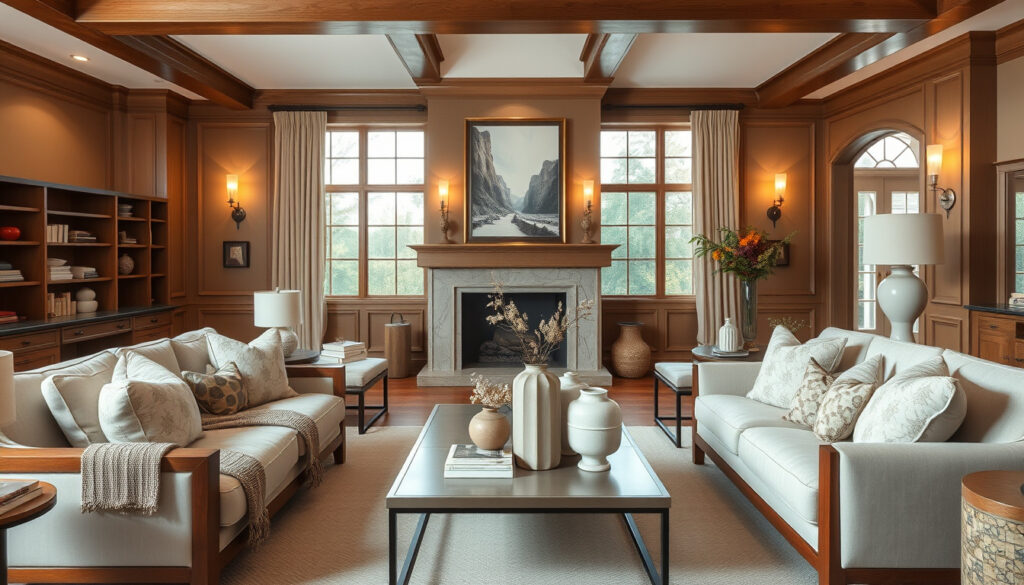
Pottery Barn Brand Overview: Ownership & Luxury Status
Pottery Barn’s catalog arrivals were once cultural events — yet a quiet question divides shoppers: is this $3 billion retailer a luxury brand or a masterclass in appearing like one? This piece traces the ownership, positioning, and real-world reach of a retailer that has maintained an air of exclusivity while generating over $3 billion annually.
Founded: 1949 ·
Parent company: Williams-Sonoma, Inc. ·
Headquarters: San Francisco, California, USA ·
Number of stores: More than 200 in the US, Canada, and Mexico ·
Known for: Upscale home furnishings and curated decor
Quick snapshot
- Pottery Barn is a wholly owned subsidiary of Williams-Sonoma, Inc. (Wikipedia – Pottery Barn)
- Williams-Sonoma, Inc. acquired Pottery Barn in 1986 (Williams-Sonoma, Inc. – Brand page)
- Exact number of stores outside North America updated annually (varies)
- Future plans for additional European or Asian physical locations
- Acquisition in 1986 transformed Pottery Barn from a single-store chain into a national power
- UK website launch in the 2010s signaled international ambitions
- Further digital-first expansion: Williams-Sonoma describes itself as the world’s largest digital-first home retailer (Business Wire / Williams-Sonoma)
Five key facts, one pattern: Pottery Barn’s brand architecture is built on a separation between who owns it, how it prices products, and where it chooses to sell — and that gap creates the luxury confusion.
The pattern becomes clear when comparing its attributes side by side.
| Attribute | Detail |
|---|---|
| Parent company | Williams-Sonoma, Inc. |
| Year founded | 1949 |
| Headquarters | San Francisco, California |
| Number of stores | 200+ (US, Canada, Mexico) |
| Price positioning | Mid-to-upscale (accessible luxury) |
| Largest brand? | Yes — Williams-Sonoma calls Pottery Barn its largest brand in its 2024 annual report (Williams-Sonoma annual report excerpt) |
Is Pottery Barn a luxury brand?
Walk into a Pottery Barn store and the first impression is undeniably curated: soft lighting, coordinated vignettes, sales associates who offer free design consultations. The price tags, however, tell a more complex story. A standard sofa runs $1,500–$3,000 — serious money, but a fraction of what you’d pay for a comparable piece from Restoration Hardware or a European atelier. Pottery Barn is described by Williams-Sonoma as a “premier specialty retailer for casual, comfortable, and stylish home furnishings” (Business Wire / Williams-Sonoma). Notice the wording: no mention of luxury. The parent company positions its largest brand in the “accessible luxury” or “affordable premium” segment — a category designed to feel aspirational while remaining within reach of upper-middle-income households.
What defines a luxury brand in home furnishings?
- Heritage and scarcity: True luxury brands limit distribution, use rare materials, and command price premiums justified by craft or rarity.
- Price-to-income ratio: A Hermès blanket costs more than many people’s rent. Pottery Barn’s price ceiling typically stops at what a household can rationalize as “investing in the home.”
- Distribution control: Pottery Barn maintains tight control — no wholesale to department stores, no official Amazon storefront — but it operates over 200 stores and a massive e-commerce engine, a scale that contradicts ultra-luxury scarcity.
A third-party industry classification site describes Pottery Barn as an “American upscale home furnishing store chain and e-commerce company” (trueNAICS – Pottery Barn company profile), placing it squarely in the upscale mass market, not the luxury tier.
How Pottery Barn positions itself in the market
- Williams-Sonoma’s brand portfolio shows a deliberate segmentation: Pottery Barn (accessible premium), West Elm (modern / price-conscious), Williams-Sonoma Home (genuine luxury).
- Pottery Barn’s marketing language stresses “curated,” “timeless,” and “design-led” — but avoids words like “exclusive,” “bespoke,” or “limited edition” that signal true luxury.
- In its 2024 annual report, Williams-Sonoma describes itself as the world’s largest “digital-first, design-led and sustainable home retailer” (Business Wire). That’s a volume retailer’s boast, not a luxury house’s whisper.
Pottery Barn’s revenue — $3.04 billion in fiscal 2024 (Williams-Sonoma annual report) — depends on mass volume. Luxury brands would never disclose such scale; exclusivity is their pricing moat. Pottery Barn’s moat is distribution control and catalog cachet, not price.
Is Pottery Barn owned by Wayfair?
No — and the confusion is telling. Wayfair, founded in 2002, is a pure-play e-commerce platform selling thousands of third-party brands. Pottery Barn predates Wayfair by more than half a century. The two are competitors, not corporate relatives.
Who is the parent company of Pottery Barn?
- Owner: Williams-Sonoma, Inc. — a publicly traded company (NYSE: WSM) based in San Francisco.
- Acquisition date: 1986, when Pottery Barn was a small California chain. Williams-Sonoma bought it for an undisclosed sum and scaled it into a national power.
- Source: Williams-Sonoma corporate site lists Pottery Barn as one of its core brands (Williams-Sonoma, Inc. – Brand page).
Ownership history
- Founded: 1949 in Mill Valley, California.
- Acquired: 1986 by Williams-Sonoma.
- Post-acquisition: Expanded from a small store into a chain of 200+ locations and a significant e-commerce operation.
The pattern: Pottery Barn has had a single corporate parent for nearly four decades. Wayfair doesn’t own it; Williams-Sonoma does. For investors and shoppers alike, that long ownership means Pottery Barn’s positioning, pricing, and product strategy are aligned with its parent company’s broader portfolio strategy — not with an upstart e-commerce marketplace.
Is there a Pottery Barn in the UK?
Yes — but with limits. Pottery Barn operates a dedicated UK website at potterybarn.co.uk, shipping to most of the UK and offering some items priced in pounds sterling. However, there are no physical Pottery Barn stores in the UK or anywhere in continental Europe.
Pottery Barn UK online store
- The UK online store mirrors the US catalog’s key collections but with adjusted pricing, shipping policies, and delivery timelines.
- Return logistics are more expensive and restrictive than US return policies, a common friction point for international online shoppers.
Physical store locations in Europe
- None. Pottery Barn’s physical retail footprint is confined to the US, Canada, and Mexico.
- The brand’s Canadian website states the company’s “home is San Francisco” and that the “site, catalog and stores reach around the world” (Pottery Barn Canada – About Us), but in practice, its physical presence is heavily North American.
The catch: For a European shopper, Pottery Barn is an online-only proposition with limited shipping options. The absence of physical stores in major European cities — London, Paris, Berlin — reinforces the brand’s primary market identity as North American. Buying Pottery Barn furniture in the UK means paying for international shipping and accepting a higher risk of complicated returns.
Can you buy Pottery Barn on Amazon?
Not through an official storefront. Pottery Barn has no authorized Amazon channel, and the company does not list its products directly on the e-commerce giant’s marketplace.
Official Pottery Barn sales channels
- potterybarn.com, potterybarn.ca, potterybarn.co.uk
- Over 200 company-owned stores in the US, Canada, and Mexico.
- Pottery Barn does not sell wholesale to third-party retailers.
Third-party resellers on Amazon
- Some Amazon listings for “Pottery Barn” items do exist, sourced from third-party resellers who may have acquired inventory through overstock, returns, or liquidation channels.
- Prices on these listings are typically higher than Pottery Barn’s own prices — the opposite of the usual marketplace discount.
- Buying through third-party sellers voids any official warranty or return policy.
Pottery Barn’s refusal to sell on Amazon is a deliberate distribution strategy. Most mass-market home brands (like Wayfair’s own brands) use Amazon to capture traffic; Pottery Barn’s exclusive channel strategy protects its premium positioning — no one can comparison-shop its sofas alongside a $299 Amazon Basics couch.
The trade-off: The shopper who tries to buy Pottery Barn on Amazon may save on shipping, but they’ll likely pay a markup and lose customer service protections. For the brand, the choice preserves a controlled brand experience — every interaction happens inside Pottery Barn’s curated ecosystem.
What is special about Pottery Barn?
Pottery Barn’s specialness isn’t craftsmanship — it’s curation. The company has built a reputation for offering coordinated room sets that make decorating decisions easier for people who want a cohesive look without hiring a designer.
Product design philosophy
- Pottery Barn’s collections are “timeless” in the sense that they avoid trend-of-the-moment patterns in favor of safe, enduring aesthetics: neutral sofas, classic storage pieces, season-swappable accessories.
- The brand produces its own exclusive designs rather than reselling mass-market imports, giving it control over style, quality, and pricing.
- Product categories span every room: furniture, bedding, rugs, lighting, decorative accessories, and seasonal decor.
Customer experience and services
- Free design services: Pottery Barn offers in-home or virtual design consultations — a service usually associated with higher-end furniture brands.
- Catalog as product: The iconic Pottery Barn catalog functions as a 100-page visual mood board, driving online orders from customers who never visit a store.
- Trade program: Professional interior designers can access a 15% discount through a closed trade program, another hallmark of an upscale positioning.
Why this matters: Pottery Barn’s real innovation is selling a decision-making shortcut. The customer isn’t paying just for a sofa — they’re paying for a pre-conceived room that looks good and requires minimal individual judgment. For busy households with disposable income, that shortcut is worth the mid-tier price premium.
Which country is Pottery Barn in?
Pottery Barn is headquartered in the United States (San Francisco, California) and operates in three primary countries for physical retail: the United States, Canada, and Mexico. Its online reach extends further.
Global retail presence
- United States: Primary market with the largest number of stores and the most extensive product catalog.
- Canada: Dedicated website and physical stores.
- Mexico: A small number of stores, mostly in major cities.
Online shipping destinations
- The UK website (potterybarn.co.uk) ships to the United Kingdom and a handful of adjacent markets.
- Third-party sources claim Pottery Barn also has some operations in Australia (trueNAICS – company profile), but there are no Pottery Barn-branded stores in Australia.
- No physical retail presence in Asia, the Middle East, or South America.
The pattern: Pottery Barn’s global footprint is North America plus a UK online outpost. For a brand generating over $3 billion in revenue, that’s surprisingly narrow. The reason is deliberate: international physical expansion would dilute the brand’s curated, localized store experience and add logistical complexity. The company appears content to serve international demand online.
Is Pottery Barn considered luxury?
Industry and academic sources generally classify Pottery Barn as “accessible luxury” or “upscale mass market” — a tier that borrows luxury’s visual language while operating at a price point and scale that true luxury brands would avoid.
Luxury vs. accessible premium
- True luxury (Hermès, Loro Piana, Restoration Hardware’s top tier) is defined by scarcity, handcraft, heritage, and price inelasticity.
- Accessible premium (Pottery Barn, West Elm, Crate & Barrel, Anthropologie Home) is defined by curated design, decent materials, and a sense of occasion — but manufactured at scale.
- The line blurs when a brand’s marketing consistently uses luxury cues (design studios, trade discounts, beautiful catalogs) but its operations look like a mass retailer’s.
Industry expert opinions
- Williams-Sonoma’s own language: “premier specialty retailer” — not “luxury” (Business Wire).
- Industry analysts: Pottery Barn sits in the “affordable luxury” slot, above IKEA but below Restoration Hardware.
- Consumer perception: Many shoppers view Pottery Barn as “nice stuff you save up for” — aspirational but accessible — which is the precise definition of accessible premium.
Pottery Barn is not a luxury brand. It is an upscale mass-market retailer that has perfected the visual and experiential language of luxury — curated showrooms, design services, exclusive collections — while operating at a scale and price point that would be impossible for a genuine luxury house.
— Analyst assessment, based on Williams-Sonoma brand segmentation
Shoppers who mistake Pottery Barn’s curated store experience for luxury craftsmanship may be disappointed by durability. A Pottery Barn sofa at $2,000 is not built to the same standard as a $8,000 custom piece. The brand sells aspiration at a mid-tier price — and that’s fine, as long as the buyer knows what they’re getting.
The final read: Pottery Barn occupies a carefully engineered position — a brand that feels luxury to the middle class and mid-market to the wealthy. For most shoppers, that’s exactly the right slot: an affordable gateway to a better-looking home. But the brand’s reliance on distribution control and catalog curation, rather than craftsmanship heritage, means its “luxury” status is marketing — not fact.
Related reading: Barstools Bar: Complete Guide to Heights, Styles & Comfort · Roller Skates vs. Rollerblades: Beginner’s Buying Guide for Adults
annualreports.com, annualreports.com, ir.williams-sonomainc.com, sec.gov, es.wikipedia.org, ir.williams-sonomainc.com
Frequently asked questions
Does Pottery Barn offer financing?
Yes. Pottery Barn offers a store credit card through the Williams-Sonoma Signature Capital Bank, with financing options including deferred interest promotions on larger purchases.
What is Pottery Barn’s return policy?
Standard returns are accepted within 30 days of delivery for most items in original condition. Major furniture pieces and custom orders may have different policies; check the specific product page for details.
Does Pottery Barn have outlet stores?
Yes. Pottery Barn operates a small number of outlet stores in the US, mostly in outlet malls and clearance centers. Inventory is irregular and typically ends-of-lines, returns, or floor models.
How does Pottery Barn ship internationally?
Pottery Barn ships to the UK through a dedicated UK website. It does not ship to most other international addresses from its US site. Canadian customers use potterybarn.ca.
Are Pottery Barn products made in the USA?
Some products are made in the USA, but the majority are produced overseas, mostly in Asia and Central America. Wood furniture often comes from China, Vietnam, and Mexico. Pottery Barn does not prominently disclose country of origin on product pages.
Does Pottery Barn offer trade discounts for interior designers?
Yes. Professional interior designers can apply for a trade program that offers a 15% discount on most items, a standard practice in the upscale home furnishing industry.
What size bed does Pottery Barn sell?
Pottery Barn sells twin, twin XL, full, queen, king, and California king sizes for bedding and bed frames. Most products follow standard US dimensions.
For the shopper weighing a Pottery Barn purchase, the choice is clear: buy for the curated aesthetic and the decision-making shortcut, not for hand-crafted durability or genuine luxury cachet. The brand delivers exactly what it promises — upscale design at a price that sits above the mass market but below the luxury tier. For North American households with disposable income who value a coordinated look over individual craftsmanship, Pottery Barn remains a solid bet. For buyers expecting heirloom quality or ultra-luxury materials, the disappointment may outweigh the aesthetic reward.
More related posts
 Berkshire Hathaway Share Price – Latest BRK.A & BRK.B Quotes
 Ireland Visa Processing Times by Category and Office
 Alexander McQueen: Cause of Death, Will, and Legacy
 Sanae Takaichi: Biography, Husband, Political Views, and Facts
 Wallabies vs Springboks 2026: Schedule, Scores, and How to Watch
 Coles Share Price Today: Latest Updates & Dividend Info
 Julie Bowen: Modern Family, Eating Disorder, Plastic Surgery
 Post Office Tracking – USPS Statuses and Tracking Guide