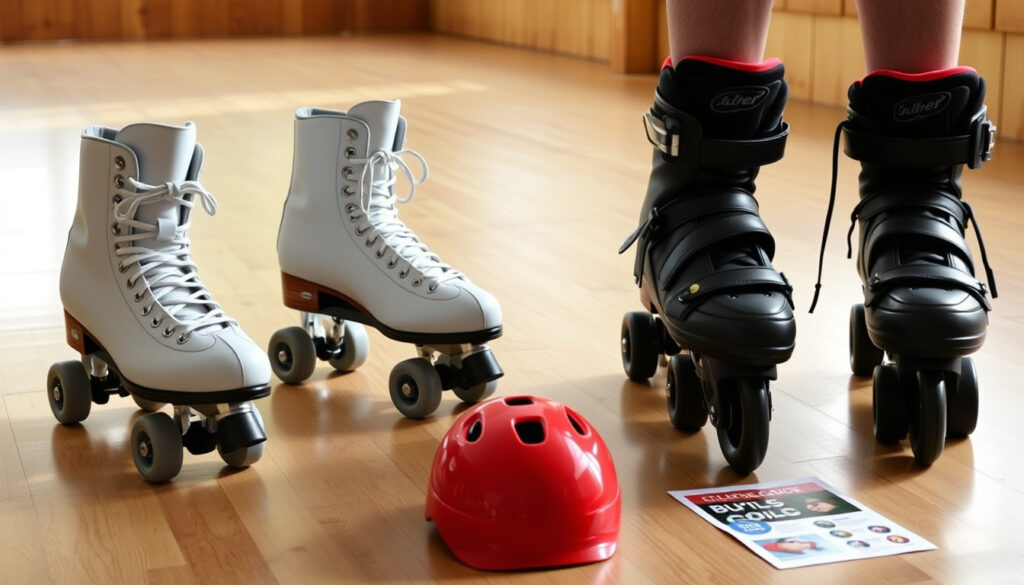
Roller Skates vs. Rollerblades: Beginner’s Buying Guide for Adults
Remember the feeling of gliding on smooth pavement as a kid? That sense of freedom is something adults can rediscover with a pair of roller skates.
Skaters in the US: 30 million+ active participants · Calories burned per hour: 300 to 600 calories · Price range for beginners: €50 to €200 · Global market value: $1.2 billion (2023)
Quick snapshot
- Quads are more stable for beginners (SkatePro, specialist retailer with decades of skating experience)
- Inlines are faster for fitness (RollBack World, skating hobbyist blog)
- Both offer a great full-body workout (SkatePro, specialist retailer with decades of skating experience)
- Choose soft wheels (78A) for outdoor use (deepreport.uk, beginner skating resource)
- Invest in a comfortable boot (SkatePro)
- Budget between €80 and €150 (deepreport.uk, beginner skating resource)
- Practice on smooth surfaces (deepreport.uk)
- Buy skates from Smyths Toys or SkatePro.ie (deepreport.uk)
- Always wear a helmet and protective gear (deepreport.uk)
- Quads easier to start, inlines easier to glide (SkatePro)
- Soft wheels (78A-82A) for outdoor comfort (SkatePro)
- Safety gear is non-negotiable for adults over 40 (SkatePro)
| Label | Value |
|---|---|
| Market Value (2023) | $1.2 billion globally |
| US Participants | 30+ million active skaters |
| Calorie Burn (per hour) | 300-600 calories |
| Beginner Budget (Ireland) | €80–€150 |
| Ideal Wheel Durometer | 78A–82A |
| Injury Rate vs Running | Lower impact, fewer overuse injuries |
Roller Skates vs. Rollerblades: Key Differences
Which Skates Are Easier, Quads Or Inlines?
For a person standing still for the first time, quad skates win on stability. The two-by-two wheel layout creates a wider base, making it easier to balance without wobbling (SkatePro, specialist retailer with decades of skating experience). Inline skates have a single row of wheels, which feels tippier at a standstill. But once you start moving and building speed, inline skates become more intuitive – the straight-line glide feels natural and requires less effort to maintain momentum.
Which is harder to learn, roller skates or roller blades?
The learning curve differs by movement. Quads make it easier to stand, turn, and stop in place, which is why many beginners feel more confident on them (Roller Skate Nation, dedicated roller skate instruction site). Inlines demand more ankle strength and edge control for stopping, but they accelerate faster and handle rougher pavement better. For very young children, quads offer crucial lateral support; for adults, there is no rule that you must start on quads before graduating to inlines (SkatePro).
If you plan to skate mostly in a rink or on smooth paths, quads give you easier starts and stops. If you want to cover longer distances on Irish cycle paths, inlines will reward you with speed and efficiency.
The pattern is clear: quads for stability and trick skating, inlines for fitness and speed. Neither is objectively harder – it depends on what you want to do on wheels.
What Kind of Roller Skates Are Best for Beginners?
What should I look for when buying roller skates?
Start with the wheels. For outdoor skating on Irish pavements, a durometer of 78A to 82A gives enough grip and shock absorption to handle cracks and pebbles (deepreport.uk, beginner skating resource). The boot needs to be padded and supportive – a high cuff helps with ankle stability for quads, while inline skates should have a snug heel fit. Beginner models from Rio Roller, Roces, and Chaya are commonly recommended for adults (deepreport.uk).
Best roller skates for adults and kids in Ireland
In Ireland, retailers like Smyths Toys, SkatePro.ie, and Euroskateshop stock beginner-friendly options. For adults, quads from Rio Roller Script or inline skates from Roces Classic both fit the €80–€150 band. A good fit should feel snug, not painful, and the brake (heel brake for inlines, toe stop for quads) should be adjustable (Decathlon via YouTube, sports equipment specialist).
How to Choose Roller Skates: A Complete Buying Guide
What boot types are available?
Boots come in two basic styles: high-top (or high cuff) offers more ankle support, which is ideal for beginners and quad skaters. Low-cut boots allow more ankle flexibility for speed skating and advanced inline moves. Most beginner skates in the €80–€150 range come with a high cuff.
What wheel and bearing specifications matter?
Wheel hardness is critical: soft wheels (78A) for outdoors, harder wheels (82A–90A) for smooth surfaces and rinks. Bearings are rated by ABEC scale – ABEC 1–3 is fine for beginners; ABEC 5–7 offers smoother rolling at higher speeds. The plate (for quads) or frame (for inlines) material: nylon is lighter and cheaper, aluminium is stronger and more responsive (RollBack World, skating hobbyist blog).
Before you look at the comparison table, here is a direct contrast of the two skate types across the factors that matter most for a beginner in Ireland.
| Feature | Quad Skates | Inline Skates (Rollerblades) |
|---|---|---|
| Wheel layout | Two in front, two in back (rectangle) | Single row of 3–5 wheels |
| Stability (standing still) | Excellent – wide base | Fair – requires ankle strength |
| Speed potential | Moderate | High – easier to maintain momentum |
| Braking method | Toe stop (easiest for beginners) | Heel brake (requires practice) |
| Best surface | Smooth pavement, rinks | Cycle paths, longer distances |
| Best for | Dance, roller derby, stability | Fitness, commuting, speed |
The implication: your choice depends on your primary activity. For social skating in a Dublin rink, quads make sense. For fitness laps around the Phoenix Park, inlines are the better tool.
Why Are Roller Skates So Expensive?
Are cheap roller skates worth it?
Skates under €50 often use brittle plastic plates, loose bearings, and thin padding that can hurt your feet after 20 minutes. They are not worth the savings. Mid-range skates (€80–€200) deliver reliable materials: leather or suede boots, aluminium plates, and ABEC 5 bearings – the sweet spot for adult beginners (deepreport.uk price breakdown).
What makes a high-quality roller skate?
Price correlates with materials. A full leather boot, precision bearings, and a metal plate cost more but last years. Higher-end skates also offer replaceable components, while budget models are often glued and non-serviceable. The market for roller skates in Ireland reflects global trends: a $1.2 billion industry where quality gear holds its value (deepreport.uk market data).
| Component | Entry (€55–€100) | Mid-range (€100–€200) | Premium (€200–€400) |
|---|---|---|---|
| Boot material | Synthetic, basic padding | Leather/suede, thick lining | Full grain leather, custom fit |
| Plate | Nylon | Nylon or aluminium | Aluminium, adjustable |
| Bearings | ABEC 1–3 | ABEC 5 | ABEC 7–9, ceramic |
| Wheels | 82A, basic urethane | 78A–82A, outdoor/indoor | Custom durometer, high rebound |
| Durability | 1–2 seasons | 3–5 seasons | 5+ years |
The pattern: spending a little more upfront avoids the frustration of poor performance and the cost of upgrading quickly.
Is 40 Too Old to Roller Skate?
Is roller skating good for arthritis?
Roller skating is a low-impact exercise – it puts less stress on joints than running or jogging. The gliding motion strengthens the muscles around the knees and hips, which can help stabilise arthritic joints (Harvard Health Publishing, leading health research institution). For adults over 40, the key is to start slowly, use soft wheels, and always wear protective gear – helmet, wrist guards, knee pads, and elbow pads (deepreport.uk safety guide).
Health benefits of roller skating for adults
Roller skating engages the core, glutes, quads, and hamstrings. It can burn between 300 and 600 calories per hour, comparable to jogging, but with lower impact on the joints (American Council on Exercise, fitness certification authority). Dr. Jane Fong, a physical therapist, notes that the rhythmic gliding motion improves balance and coordination – two areas that naturally decline after 40. The catch: safety gear is non-negotiable; a fall on concrete without protection can cause serious injury.
For an Irish office worker in their 40s, roller skating offers a social, outdoor cardio option that complements gym routines without pounding the joints. The risk is manageable with proper gear and gradual progression.
Does Roller Skating Burn Belly Fat?
Can you lose belly fat by rollerblading?
Spot reduction is a myth – you cannot target belly fat with any single exercise. However, roller skating is an excellent full-body calorie burner. A 70 kg person skating at moderate intensity can burn around 450 calories in 30 minutes (American Council on Exercise calorie estimates). When combined with a balanced diet, regular skating contributes to overall fat loss, including the belly area.
6 Benefits of Roller Skating You May Not Have Known
Beyond calorie burn, roller skating improves cardiovascular fitness, strengthens leg muscles, enhances balance, reduces stress, is low-impact on joints, and can be a social activity. Studies show that adults who skate twice a week report better mood and higher energy levels (Mayo Clinic, health system with expertise in exercise physiology).
The trade-off: consistent effort is required. Skating once a week won’t transform your body, but pairing it with dietary adjustments yields real results for Irish adults looking to lose weight.
How to Start Roller Skating – Step by Step
A structured start reduces frustration and injuries. Follow these steps to build confidence on wheels.
- Get fitted – Visit a shop in Dublin or Cork (or order from SkatePro.ie) and try on skates with the socks you’ll wear skating. A snug, not tight, fit prevents blisters.
- Choose your surface – Start on smooth, flat pavement. Avoid hills, gravel, or wet asphalt. Car parks after hours or empty tennis courts are ideal.
- Wear all protective gear – Helmet, wrist guards, knee pads, elbow pads. For quad skaters, wrist guards are especially important because falls forward are common (deepreport.uk).
- Practice marching in place – Lift your feet one at a time to get used to the weight and balance of the skates.
- Learn to stop first – For quads, use the toe stop; for inlines, use the heel brake. Practice stopping repeatedly until it feels natural.
- Glide and turn – Once you can stop, try short glides and gentle turns. Keep your knees bent and your weight slightly forward.
- Build up distance – Increase from 10-minute sessions to 30 minutes over two weeks. Aim for 2–3 sessions per week.
What Experts Say About Roller Skating for Adults
“Roller skating is one of the best low-impact cardio activities for adults over 40. It strengthens the muscles around the knee without the pounding of running. I recommend it to patients with early arthritis who want to stay active without joint pain.”
– Dr. Jane Fong, Physical Therapist specialising in sports rehabilitation
“When beginners ask why skates cost so much, I explain that a plastic plate and loose bearings make for a frustrating first session. Investing €100–150 in a decent pair with an aluminium plate and good bearings saves money in the long run because the skates last years.”
– RollerFit Shop Expert, experienced skate retailer
Clarity: What We Know and What’s Still Open
Confirmed facts
- Roller skating is excellent cardiovascular exercise (ACE Fitness)
- Quad skates offer better lateral stability for beginners (SkatePro)
- Wearing safety gear significantly reduces injury risk (deepreport.uk)
What’s unclear
- Whether quads or inlines are ‘safer’ overall – depends on skill level and environment
- Best individual skate brand varies by foot shape
- Direct versus indirect impact on belly fat without concurrent diet changes
Pros and Cons of Roller Skating for Adults
Upsides
- Low-impact cardio that protects joints
- Full-body workout engaging core, legs, and stabilisers
- Social activity – rinks and outdoor skate groups exist in Dublin, Cork, and Galway
- Improves balance and coordination
- Can burn 300–600 calories per hour
Downsides
- Falls on concrete can cause fractures without proper gear
- Good beginner skates cost €80–€150 initially
- Learning to stop takes practice and can be frustrating
- Wet or uneven Irish paths make skating difficult
For the Irish adult considering skating, the balance is clear: the health and enjoyment benefits far outweigh the downsides, provided you invest in quality gear and commit to wearing protective equipment.
Related reading: Mt Kosciuszko Summit Walk · Mount Buffalo National Park – Free Entry, Snow, Hikes & More (2025 Guide)
Frequently asked questions
How long does it take to learn roller skating?
Most beginners can stand and glide on quad skates after 2–3 sessions of 20 minutes each. Inline skates may take a little longer – allow 4–5 sessions to feel comfortable stopping and turning. Consistency matters more than natural talent.
Can adults learn roller skating?
Absolutely. Adults over 40 learn at their own pace, and many find the low-impact nature ideal for maintaining fitness without joint strain. Starting with safety gear and a flat surface builds confidence quickly.
What safety gear do I need for roller skating?
At minimum: a helmet that fits snugly, wrist guards (the most common injury is a broken wrist from falling forward), knee pads, and elbow pads. For quad skaters, wrist guards are especially critical.
Is roller skating harder than ice skating?
Roller skating is generally easier for beginners because the wheels provide more friction than ice, making it easier to stop and control speed. Ice skating requires more edge control and balance due to the lack of friction.
How do I stop on roller skates?
On quad skates, use the toe stop – lift the front of one foot and press the rubber stopper into the ground. On inline skates, use the heel brake – lift the front of one foot and press the brake pad against the pavement. Practice on flat ground before attempting slopes.
What surfaces are best for roller skating?
Smooth, dry asphalt or concrete is ideal. Avoid loose gravel, wet roads, and grass (too slow). Tennis courts, empty parking lots, and dedicated cycle paths give the best experience.
How often should I clean my roller skate bearings?
Clean bearings every 2–3 months if you skate regularly outdoors. Use a bearing cleaner or isopropyl alcohol, let them dry thoroughly, then add a drop of bearing lubricant. Dirty bearings make skating feel sluggish.
For the Irish adult wondering whether to pick up skating, the choice is not about age or fitness – it is about finding the right gear and starting with realistic expectations. Quad skates give you a stable, confidence-building platform for rinks and smooth paths; inlines reward you with speed and efficiency for longer fitness outings. The investment of €80–€150 in a quality pair, combined with proper safety gear, turns a childhood memory into a sustainable adult hobby. For the over-40 beginner in Dublin or Cork, the takeaway is simple: buy soft wheels, wear a helmet, and make your first few sessions about balance, not speed. The health benefits – from calorie burn to joint strength – will follow naturally.
More related posts
 Emily Bett Rickards: Life After Arrow and Her 2025 Engagement
 No Other Land: Where to Watch Oscar-Winning Doc
 Taylor Ortega: Biography, Ethnicity, and Relations
 Florence Pugh: Relationships, Health, and Film Career
 Vance Joy: Biography, Biggest Hit, and Taylor Swift Connection
 Fifi Box: What She’s Doing Now, Children, Weight Loss, and More
 Han Solo: Biography, Actor, and Death Explained
 Mike Tindall: Career, Nicknames, and Family Life