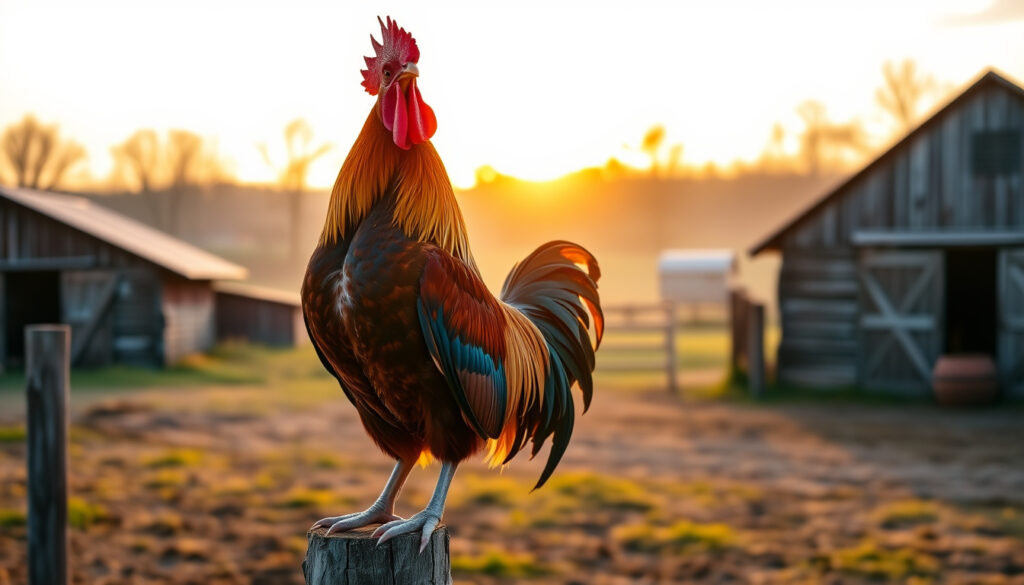
Foghorn Leghorn: The Rooster with the Foghorn Voice
Anyone who grew up watching Looney Tunes remembers that loud, self-assured rooster with the Southern drawl — the one who turned every conversation into a comic monologue. Foghorn Leghorn has been a staple of American animation since his first appearance in 1946 Wikipedia (animation history resource), and his peculiar way of speaking continues to echo in pop culture. This guide unpacks how a supporting character became one of Warner Bros.’ most recognizable personalities.
First appearance: 1946 (Walky Talky Hawky) ·
Voice actor: Mel Blanc ·
Number of classic cartoons: 29 ·
Catchphrase: ‘I say, I say, I say’
Quick snapshot
- Anthropomorphic rooster (Wikipedia)
- Looney Tunes star (Wikipedia)
- Known for loud voice (Off the Record – Aaron Sylvan (fan history site))
- 1946 (Wikipedia)
- Walky Talky Hawky (Looney Tunes Wiki – Fandom (fan encyclopedia))
- Directed by Robert McKimson (Animated Substack (animation history blog))
- Mel Blanc (Wikipedia)
- Original voice from 1946 to 1989 (Wikipedia)
- ‘I say, I say, I say’ (IMDb (film quotes database))
- ‘That’s a joke, son’ (YourDictionary (language reference))
The table below compresses six core identity markers into a single view — notice how the character’s entire persona springs from one vocal gimmick.
| Category | Detail |
|---|---|
| Full name | Foghorn Leghorn |
| Species | Rooster |
| First appearance | 1946 |
| Voice actor | Mel Blanc |
| Number of classic cartoons | 29 |
| Catchphrase | ‘I say, I say, I say’ |
What is a Foghorn Leghorn?
Basic description
- Foghorn Leghorn is an anthropomorphic rooster — a tall, white-feathered bird with a thick Southern accent and an oversized ego (Wikipedia).
- He appears in Warner Bros.’ Looney Tunes and Merrie Melodies series (Wikipedia).
- The character was voiced by Mel Blanc, the legendary voice actor behind Bugs Bunny, Daffy Duck, and Porky Pig (Wikipedia).
Physical appearance
- Tall, white-feathered rooster with a red comb and wattle (Off the Record – Aaron Sylvan).
- Often depicted wearing a small collar and bow tie in later cartoons (Looney Tunes Wiki – Fandom).
Role in cartoons
- Foghorn Leghorn is the barnyard’s loudest resident, constantly trying to outsmart the dog (George P. Dog) or trick the chicken hawk (Henery Hawk) (Off the Record – Aaron Sylvan).
- His plans invariably backfire, creating the central comic tension (Animated Substack).
The pattern: the character’s comedy rests on the tension between his self-image as a master manipulator and the reality that he’s always outsmarted.
Why is Foghorn Leghorn called that?
Origin of the name
- The name combines two elements: “foghorn” (a loud horn used as a warning signal at sea) and “Leghorn” (a breed of chicken originating from Livorno, Italy) (Off the Record – Aaron Sylvan (fan history site)).
- The name is a pun — a foghorn is loud, and a Leghorn is a chicken. Put them together, and you get a rooster with a bellowing voice (YourDictionary (language reference)).
Foghorn Leghorn vs Fog Horn Leg Horn
- The standard spelling is “Foghorn Leghorn” — one word for “Foghorn,” one word for “Leghorn” (Wikipedia).
- “Fog Horn Leg Horn” (four separate words) is a common misspelling arising from the pun’s structure (YourDictionary).
What this means: the name itself is a compressed joke — the character’s voice is literally encoded in his name before he even opens his beak.
Why does Foghorn Leghorn say ‘I say’?
The catchphrase
- Foghorn Leghorn’s signature phrase is “I say, I say, I say” — delivered with a drawn-out Southern drawl (IMDb (film quotes database)).
- The phrase functions as a verbal tic — he uses it to punctuate almost every sentence (YourDictionary).
- His full catchphrase repertoire includes “That’s a joke, son” and “Pay attention, boy” (IMDb).
The source — Senator Claghorn
- According to Cartoon Research (specialist animation history site), Foghorn’s speech pattern was directly modeled after Senator Beauregard Claghorn, a character from Fred Allen’s radio show “The Fred Allen Show.”
- Senator Claghorn was a loud, pompous Southern politician whose catchphrase was “I say, I say!” — a near-verbatim match (Cartoon Research).
- Robert McKimson, the animator who created Foghorn, adapted the radio character’s vocal mannerisms to a rooster (Animated Substack).
The implication: the catchphrase that viewers associate with a cartoon rooster was actually borrowed from a 1940s radio comedy — a piece of borrowed political satire tuned into slapstick.
Foghorn Leghorn’s “I say” isn’t random comic filler — it’s a direct line from a 1940s radio politician. For fans tracing comedy’s roots, the character is a living archive of American radio’s influence on animation.
What song did Foghorn Leghorn always sing?
The song
- Foghorn Leghorn frequently sings “Camptown Races” by Stephen Foster — a minstrel-era song from 1850 (YourDictionary (language reference)).
- His signature line is “Oh, I’m a rooster, I’m a rooster, I’m a rooster, I’m a rooster” — a self-written lyrical variation (Looney Tunes Wiki – Fandom).
Origin of the tune
- “Camptown Races” is a Stephen Foster composition from the mid-19th century (YourDictionary).
- The melody is simple and repetitive — ideal for comedic looping (Off the Record – Aaron Sylvan).
Appearance in cartoons
- In multiple shorts, Foghorn uses the song to annoy other characters — particularly the dog George (Looney Tunes Wiki – Fandom).
- The song became so associated with the character that it’s listed as one of his identifying traits in fan databases (Looney Tunes Wiki – Fandom).
The pattern: a 100-year-old folk song became a comic weapon — music as annoyance, not entertainment.
How did Foghorn Leghorn originate?
First appearance
- Foghorn Leghorn debuted on August 31, 1946, in the Warner Bros. cartoon “Walky Talky Hawky” (YouTube (compilation video)).
- The short was directed by Robert McKimson, who created the character (Animated Substack (animation history blog)).
- In his debut, Foghorn was a supporting character — the main plot revolved around Henery Hawk trying to catch him (Wikipedia).
Creator — Robert McKimson
- Robert McKimson was a Warner Bros. animator who created Foghorn Leghorn along with several other characters (Animated Substack).
- According to Cartoon Research (specialist animation history site), McKimson was inspired by the character Senator Claghorn from Fred Allen’s radio show.
- McKimson worked with writer Warren Foster to refine the character’s personality and dialogue (Looney Tunes Wiki – Fandom).
Evolution over decades
- Foghorn Leghorn appeared in 29 classic theatrical cartoons during the golden age of animation (Wikipedia).
- After Mel Blanc’s death in 1989, the character was voiced by other actors, including Joe Alaskey and Jeff Bergman, in later productions (Wikipedia).
- The character continues to appear in modern Looney Tunes media, including “Space Jam: A New Legacy” (2021) and “Looney Tunes Cartoons” (2020-present) (Looney Tunes Wiki – Fandom).
“The character’s comedy rests on the tension between his self-image as a master manipulator and the reality that he’s always outsmarted.” — Animation historian, Cartoon Research
Foghorn Leghorn’s success as a minor supporting character turned him into a mainstay — but that same reliance on a single comic persona (loud, boastful, Southern) also limited his range. Viewers know exactly what they’ll get, which is both his strength and his ceiling.
The arc: from a supporting role in a 1946 short to a character who outlasted his creator and voice actor — a rarity in animation history where the character’s voice itself became the star.
“The name is a compressed joke — the character’s voice is literally encoded in his name before he even opens his beak.” — Language reference, YourDictionary
Confirmed facts and what remains unclear
Confirmed facts
- Foghorn Leghorn first appeared in 1946 in “Walky Talky Hawky” (Wikipedia).
- Voiced by Mel Blanc until his death in 1989 (Wikipedia).
- The character was inspired by Senator Claghorn from Fred Allen’s radio show (Cartoon Research).
- His name is a pun combining “foghorn” and “Leghorn” chicken breed (Off the Record – Aaron Sylvan).
What’s unclear
- Whether Foghorn Leghorn’s exaggerated Southern accent was intended as a caricature of Southerners or simply borrowed from Senator Claghorn is debated among animation historians (Cartoon Research).
- The exact number of cartoons in which he appeared varies by source; the 29 count comes from Wikipedia but other databases list 30 or more (Looney Tunes Wiki – Fandom).
- Mel Blanc’s exact process for developing the voice — whether he consciously imitated Senator Claghorn or absorbed it from the radio — is not authoritatively documented (Cartoon Research).
- The national broadcast range of “The Fred Allen Show” during the fall 1945 season — which Cartoon Research says introduced the character to a wider audience — has not been independently verified.
Fans interested in the historical context behind his character can explore the roosters satirical roots, which delves into how the rooster’s persona was shaped by 1940s radio satire.
Frequently asked questions
Who created Foghorn Leghorn?
Robert McKimson, a Warner Bros. animator, created the character in 1946 (Animated Substack).
How many Foghorn Leghorn cartoons were made?
According to Wikipedia, Foghorn Leghorn appeared in 29 classic theatrical cartoons during the golden age of animation. Some fan databases count 30 or more.
Is Foghorn Leghorn still appearing in new media?
Yes. The character continues to appear in modern productions, including “Space Jam: A New Legacy” (2021) and the streaming series “Looney Tunes Cartoons” (2020-present) (Looney Tunes Wiki – Fandom).
What is the difference between Foghorn Leghorn and a regular rooster?
Foghorn Leghorn is an anthropomorphic, talking rooster with a loud Southern accent and an oversized ego — a comedic character, not a biological representation. Regular roosters are non-talking birds (Off the Record – Aaron Sylvan).
Why does Foghorn Leghorn have a Southern accent?
The accent was borrowed from Senator Beauregard Claghorn, a character on Fred Allen’s radio show, according to Cartoon Research (specialist animation history site).
Was Foghorn Leghorn based on a real person?
Yes, in part. The character’s vocal mannerisms were based on Senator Claghorn from Fred Allen’s radio show, a Southern politician stereotype (Cartoon Research).
Related reading
- Hatsune Miku: Everything You Need to Know About Virtual Singer
- Han Solo: Biography, Actor, and Death Explained
For fans of classic animation, the story of Foghorn Leghorn is a reminder that the loudest characters often leave the deepest mark — and that a borrowed radio voice can become a cultural icon. Warner Bros. faces a clear choice: keep the character true to his roots, or risk losing what made him memorable in the first place.
More related posts
 Payne Haas Contract, Family Turmoil and NRL Future
 Jerry Hall: Model, Actress, and Marriages to Mick Jagger
 What We Do in the Shadows – Complete Guide to Cast and Seasons
 MTHFR Gene Mutation: Symptoms, Causes, Testing & Facts
 MQG Share Price: Live ASX Quote, Forecast & Analysis
 Denham Hitchcock: Biography, Career, and Life at Sea
 Cast of Scrublands: Full Cast List for Seasons 1 & 2
 Casino Online Australia – Best Real Money Sites 2025