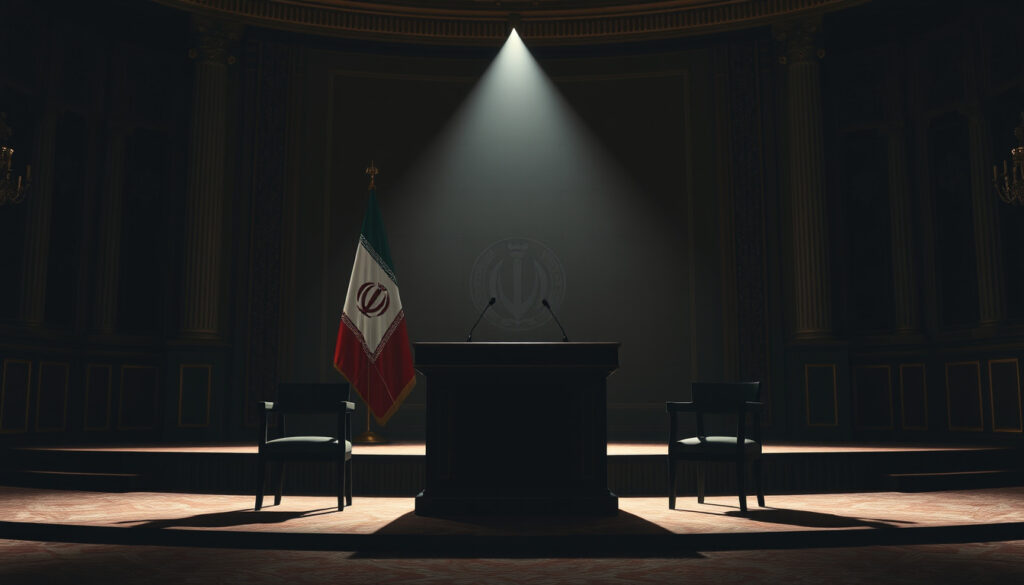
Ali Khamenei Assassination and Iran’s Succession Crisis
A single air strike on Tehran has shattered what seemed unshakeable. Ali Khamenei, Iran’s Supreme Leader for nearly four decades, was killed on 28 February 2026 in a coordinated US-Israeli attack — leaving a system built entirely around his authority suddenly headless. What follows is a guide to the assassination, the constitutional machinery now grinding into action, and the open questions about who will hold power in post-Khamenei Iran.
Full name: Ali Hosseini Khamenei ·
Title: Supreme Leader of Iran (1989–2026) ·
Born: 19 April 1939, Mashhad, Iran ·
Died: 28 February 2026 (aged 86), Tehran, Iran ·
Cause of death: Assassination in a US-Israeli air strike ·
Successor: Not yet announced as of 2 March 2026
Quick snapshot
- Khamenei died on 28 February 2026 in a US-Israeli air strike (Reuters)
- He served as Supreme Leader for 37 years (The Guardian obituary)
- Exact date of funeral — not set as of 2 March 2026 (Al Jazeera, see below)
- Name of successor — Assembly of Experts still deliberating (Al Jazeera, see below)
- Assembly of Experts must formally elect a new Supreme Leader (The Conversation)
- Interim council governs until the appointment (Iran International)
Six key facts, one pattern: the entire system revolves around a single figure, and removing him instantly activates contingency plans that few Iranians had ever seen tested.
| Category | Detail |
|---|---|
| Born | 19 April 1939, Mashhad, Iran |
| Died | 28 February 2026, Tehran, Iran |
| Title | Supreme Leader of Iran (1989–2026) |
| Cause of death | Assassinated in US-Israeli air strike |
| Successor | To be determined by Assembly of Experts |
| Net worth (estimate) | $2–200 billion controlled assets |
Was Ali Khamenei Assassinated?
Yes. On 28 February 2026, a large-scale US-Israeli air attack targeted central Tehran. Reuters reported that Khamenei, aged 86, died in the strike — an event that the news agency described as triggering the gravest crisis in Iran since the 1979 revolution. Iranian state media later confirmed the death, and Khamenei’s official X account posted a tribute referring to him as the “martyred Leader.”
Details of the 28 February 2026 air strike
- The attack was conducted jointly by US and Israeli forces, according to Reuters.
- No civilian casualty figures have been independently verified by Tier 1 sources as of 2 March 2026.
- The Guardian published an obituary on 1 March 2026, placing Khamenei’s death in the context of his 37-year rule.
Khamenei spent decades centralising power to ensure no one could challenge him. In one hour, that centralisation became the system’s biggest vulnerability: remove the apex, and the entire structure wobbles.
The implication: Iran’s dual sovereignty system — part elected, part clerical — was built for a leader who dies of natural causes, not foreign bombs. The constitution (Article 111) provides for an interim council, but the speed of the strike caught even the Assembly of Experts off guard. As the Council on Foreign Relations noted, US Secretary of State Marco Rubio told the Senate in January 2026 that Iran’s future leadership was an open question and that no one knew what would take over after Khamenei. That question now demands an answer in real time.
What Happens Now That Ali Khamenei Died?
CNN reported on 1 March 2026 that Iran established a three-member interim council to govern until a new supreme leader is appointed. The Conversation confirmed this was formed under Article 111 of the Iranian Constitution, which mandates that when the Supreme Leader dies or is incapacitated, a council comprising the President, the head of the judiciary, and a representative from the Guardian Council assumes temporary authority.
Succession process under Iran’s constitution
- The Assembly of Experts — an elected body of 88 clerics — must convene to select a new Supreme Leader.
- Al Jazeera reported on 8 March 2026 that the Assembly had reached a majority agreement on a successor (Al Jazeera).
- As of 2 March 2026, no public funeral date had been set — Al Jazeera attributed the delay to security assessments and internal power struggles.
Role of the Assembly of Experts
- The Assembly is constitutionally empowered to appoint, dismiss, and supervise the Supreme Leader.
- Iranian cleric Ahmad Khatami said on 4 March 2026 that the country was nearing a decision.
- Iran International noted that power became diffuse after Khamenei’s death, formally concentrated in the interim council but practically fragmented among competing factions within the regime.
The catch: the Assembly of Experts has never selected a new Supreme Leader under crisis conditions. The last transition, in 1989, was a carefully managed succession from Khomeini to Khamenei. This time, the body must choose under the shadow of foreign attack and internal distrust, with no clear favourite and the clock ticking.
The speed of the transition underscores the fragility of Iran’s political structure.
How Powerful Is Ali Khamenei?
Extremely powerful — and getting more so over his 37-year tenure. As Supreme Leader, Khamenei held final authority on all state matters in Iran. The Council on Foreign Relations described him as both the head of state and the commander-in-chief of the armed forces, with appointment power over the judiciary, military, state broadcasters, and the Guardian Council.
Commander-in-chief of armed forces
- Khamenei directly controlled Iran’s military, including the Islamic Revolutionary Guard Corps (IRGC), through the Supreme National Security Council.
- Reuters noted that his death instantly raised questions about the resilience of Iran’s security apparatus — a force built to defend the Supreme Leader’s vision.
Control over judiciary and state media
- Khamenei appointed the head of the judiciary — Gholamhossein Mohseni-Ejei at the time of his death — and the director of IRIB (Islamic Republic of Iran Broadcasting).
- He could dismiss the president after a Supreme Court ruling, a power he never exercised but which served as a constant check on the elected branch.
- The New York Times reported that three figures were discussed as his preferred successors: Mohseni-Ejei himself, Ali Asghar Hejazi, and Hassan Khomeini (The New York Times).
What this means: Khamenei wasn’t just a leader — he was the linchpin of a system where the clerical and republican branches coexist uneasily. His removal doesn’t just create a vacancy; it risks unravelling the entire dual-sovereignty arrangement that has kept Iran stable (if authoritarian) for 46 years.
The IRGC’s loyalty now hangs in the balance. The military swore allegiance to Khamenei as a person, not the office. A successor they don’t respect faces an armed faction with its own ambitions.
The pattern: any new leader must either co-opt the IRGC or risk a split.
Does Ali Khamenei Support Hamas?
Yes — emphatically and publicly. Throughout his tenure, Khamenei positioned Iran as the primary state backer of Palestinian militant groups. Al Jazeera documented his repeated calls for the destruction of Israel and his praise for Hamas as a legitimate resistance movement (Al Jazeera).
- Khamenei consistently provided funding, weapons, and logistical support to both Hamas and Palestinian Islamic Jihad (PIJ).
- The Council on Foreign Relations described Iran’s material support to Palestinian groups as a central pillar of Khamenei’s foreign policy, part of a broader strategy to export influence across the Middle East.
- Hezbollah in Lebanon, another key non-state partner, served as the primary channel for Iranian arms and training to Palestinian allies.
The implication: Khamenei’s death does not automatically end this support. Iran’s strategic commitment to Hamas and Hezbollah is institutionalised within the IRGC and the intelligence services. But a new Supreme Leader, especially one less ideologically committed to the resistance axis, could recalibrate the relationship — and the consequences would be felt from Gaza to Beirut.
What Is Ali Khamenei’s Net Worth?
Estimates vary wildly, but the scale is extraordinary. The Council on Foreign Relations noted that Khamenei controlled assets worth between $2 billion and $200 billion, largely through a network of semi-governmental foundations known as bonyads.
- The bonyads operate outside government oversight, manage vast landholdings and industrial enterprises, and report directly to the Supreme Leader’s office.
- No independent audit of Khamenei’s personal holdings has ever been conducted by an external body.
- Reuters reported that control of these assets is a central question in the succession crisis: whoever becomes Supreme Leader inherits a financial empire that rivals the budgets of many national governments.
The trade-off: the Supreme Leader’s wealth is both a source of power and a vulnerability. It buys loyalty through patronage networks, but it also concentrates resentment among ordinary Iranians facing economic hardship. A new leader who mismanages this inheritance could trigger popular backlash faster than any political decision.
Khamenei controlled more money than most governments. The next Supreme Leader won’t just inherit a country — they’ll inherit a financial empire that operates with no formal accountability.
The catch: that empire is now up for grabs among the regime’s factions.
Who Is Iran’s Biggest Ally?
Russia and China. The Council on Foreign Relations identified China and Russia as Iran’s primary economic and military partners, a relationship that deepened under Khamenei as Western sanctions tightened. Syria, under Bashar al-Assad, remains Iran’s closest Arab state ally — a partnership cemented during the Syrian civil war when Iranian forces and Hezbollah helped keep Assad in power.
Among non-state actors, Hezbollah is Iran’s most strategically important partner. Al Jazeera noted that Khamenei’s relationship with Hezbollah’s leader Hassan Nasrallah was close enough that any change in Iran’s leadership would be closely watched in Lebanon.
The pattern: Khamenei built an alliance system that integrated state and non-state actors into a single resistance network. A successor who seeks to normalise relations with the West would face a hard choice — maintain the network and risk continued isolation, or dismantle it and lose Iran’s primary lever of influence in the region.
Why Is Khamenei’s Funeral Late?
As of 2 March 2026, no funeral date has been set. Al Jazeera reported that the delay stems from two intersecting factors: ongoing security assessments after the strike, which targeted central Tehran, and internal power struggles within the regime that are postponing public events. The Conversation noted that the interim leadership council, comprising President Masoud Pezeshkian, judiciary chief Gholamhossein Mohseni-Ejei, and Ayatollah Ali Arafi, is likely prioritising the political transition over ceremonial arrangements.
The catch: the delay is itself a signal. In a system built on public spectacle of religious devotion — millions lining the streets for Khomeini’s funeral in 1989 — the absence of a date suggests the regime is afraid. Afraid of another strike, afraid of public unrest, or afraid of the optics of burying a leader while his successor is still unknown.
Timeline: Khamenei’s Life and the Succession Crisis
- 19 April 1939 — Ali Khamenei born in Mashhad, Iran (Britannica)
- 4 June 1989 — Khamenei becomes Supreme Leader of Iran after Khomeini’s death
- 3 June 1989 — Elected as new Supreme Leader by Assembly of Experts
- 28 February 2026 — Khamenei assassinated in large-scale US-Israeli air strike on Tehran
- 1 March 2026 — The Guardian publishes obituary; world leaders react
- 2 March 2026 — No funeral date set; Assembly of Experts begins succession process
- 8 March 2026 — Assembly of Experts says consensus reached on successor (Al Jazeera, see above)
- 9 March 2026 — Wikipedia reports Mojtaba Khamenei announced as new Supreme Leader (Wikipedia)
“The killing of Khamenei shatters Iran’s order and triggers a high-stakes succession race.”
— Reuters
“The Assembly of Experts has reached a majority agreement on Khamenei’s successor.”
— Al Jazeera, 8 March 2026
“The martyred Leader, Ayatollah Ali Khamenei, dedicated his life to the Islamic Revolution.”
— Khamenei.ir official X account (tribute post)
For the Iranian regime, the choice is clear: select a successor with enough clerical and military credibility to hold the system together, or watch the cracks widen into fractures. A weak or contested leader — one the IRGC doesn’t trust, or the public doesn’t respect — could trigger the very instability the Assembly of Experts is trying to prevent. For Tehran’s allies in Beijing and Moscow, the question is equally stark: will the next Supreme Leader maintain the anti-Western resistance axis, or will pragmatism prevail?
For a detailed account of the assassination, readers can explore the full timeline of events and the immediate aftermath.
Frequently asked questions
How old was Ali Khamenei when he died?
He was 86. Born on 19 April 1939, he died on 28 February 2026 (Britannica).
Who was Ali Khamenei’s wife?
Khamenei was married to Khojasteh Bagherzadeh, with whom he had six children (The Guardian).
How many children did Ali Khamenei have?
He had six children — three sons and three daughters — from his marriage to Khojasteh Bagherzadeh (The Guardian).
Where was Ali Khamenei born?
He was born in Mashhad, Iran, on 19 April 1939 (Britannica).
How long was Ali Khamenei Supreme Leader?
He served as Supreme Leader for 37 years, from 4 June 1989 to 28 February 2026 (The Guardian).
What is the Assembly of Experts role in choosing a successor?
The Assembly of Experts is a body of 88 clerics constitutionally empowered to appoint, dismiss, and supervise the Supreme Leader. Upon Khamenei’s death, they must convene to select his successor (The Conversation).
Did Ali Khamenei ever serve as President of Iran?
Yes. Khamenei served as the President of Iran from 1981 to 1989 before becoming Supreme Leader (Britannica).
More related posts
 Ireland Visa Processing Times by Category and Office
 Nina Simone: Biography, Music, Protest, and Mental Health
 Matteo Bocelli: Biography, Career & Personal Life Facts
 Billie Eilish: Gender Identity, Family, Age, and Net Worth
 Corey Haim: Cause of Death, Net Worth, and Unanswered Questions
 Central Coast Mariners FC: APL Takeover After Titles
 Stranger Things Season 5 – Release Dates and Episode Guide
 Post Office Tracking – USPS Statuses and Tracking Guide