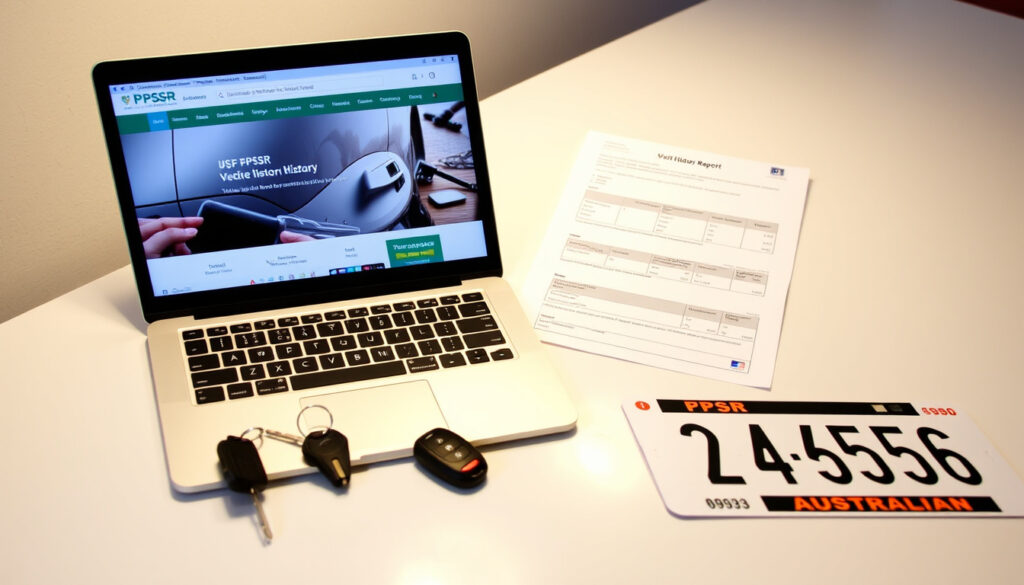
PPSR Check SA: How to Check Car History in South Australia
If you’re shopping for a used car in South Australia, a quick rego check might feel like enough. But registration expiry is only part of the picture — the real risk is buying a vehicle with debt still owing or one that was written off. That’s where a $2 PPSR search on the Australian Government’s national register gives you the full story.
Cost of a standard PPSR search: $2 (as of 2025) ·
Register type: National, covering all states including South Australia ·
Launched under PPSA: 2012 ·
Free SA rego check available: via sa.gov.au
Quick snapshot
- PPSR search costs $2 and returns instant results (PPSR newsroom)
- Search requires the vehicle’s VIN or chassis number – number plate or engine number won’t work (PPSR newsroom)
- Results show stolen status, write-off history, and outstanding security interests (PPSR newsroom)
- Some third‑party check services charge extra fees and may not be official (PPSR.com.au)
- The register has operated since 2012 under the PPSA with no major structural changes projected (Australian Government PPSR)
- Perform a PPSR search when you find a car and again on the actual day of purchase (PPSR newsroom)
Six key details that compare the free state check with the national PPSR search:
| Detail | Value |
|---|---|
| PPSR search fee | $2 |
| SA rego check fee | Free |
| VIN required | Yes (17‑character serial number) |
| Results delivery | Instant online report |
| Number of searches daily | Not known but >10,000 |
| Information covered | Stolen, write‑off, security interests |
How to check car history in South Australia?
Performing a thorough vehicle history check in South Australia involves two separate steps: the free state registration check and the comprehensive national PPSR search. The rego check, available through the Government of South Australia (state registration authority), tells you only whether the vehicle is currently registered and when the registration expires. To uncover hidden financial encumbrances or theft status, you need the $2 PPSR search.
- Get the VIN or chassis number – locate the 17‑character VIN on the metal plate under the windscreen or inside the driver’s door frame. Most cars built after 1989 have a VIN according to the PPSR newsroom (government guidance).
- Run a free SA rego check – visit sa.gov.au and enter the number plate or VIN to see registration status and expiry.
- Perform the official PPSR search – go to ppsr.gov.au, enter the VIN or chassis number, pay $2 (as of 2025), and receive an instant online certificate that arrives by email. The PPSR newsroom recommends doing this search twice – when you first find the car and again on the day of purchase.
- Review the report – the certificate shows whether the vehicle is listed as stolen, has been written off, or has any outstanding security interests (money owing). If no encumbrances appear, the property is considered clear.
A free SA rego check shows expiry but not financial encumbrances. For $2, a PPSR search fills that gap. Skipping the PPSR could mean inheriting thousands of dollars in debt.
What this means: a simple number‑plate lookup won’t protect you from buying a car that’s still being paid off. The PPSR is the only official tool that reveals security interests.
Who needs to use the PPSR?
The Personal Property Securities Register is designed for anyone buying or lending against personal property. Three groups in particular rely on it:
- Buyers of second‑hand vehicles and boats – to avoid purchasing an asset that has finance owing or was stolen. According to the PPSR newsroom, a search “can help you determine whether goods you want to buy are likely to be free from debt or other risks to your money.”
- Lenders and financiers – to verify existing security interests before approving a loan against a vehicle or equipment.
- Suppliers and businesses leasing equipment – to ensure the goods they are selling or renting are free of prior interests.
The pattern: the PPSR acts as a single national database that replaces dozens of state registers. For anyone transferring ownership or lending against an asset, searching it is the only reliable way to know the property is clear.
Can you check if a caravan has been stolen?
Yes – the PPSR covers caravans, trailers, boats, and other vehicles, not just cars. According to the Australian Government PPSR (the official national register), you need the caravan’s VIN or chassis number to search. If the result shows a stolen status, authorities will closely examine the vehicle when you attempt to register it.
Many used‑caravan buyers skip this step, assuming only cars are tracked. But the register includes all personal property with a serial number, so a trailer or boat can have a hidden security interest just as easily as a sedan.
“Buying your first used car? Don’t get caught out – do a $2 PPSR search before you buy.”
– Australian Government PPSR, PPSR newsroom
The implication: a caravan can carry thousands of dollars of debt without any visible sign. The $2 search is cheap insurance against that risk.
How can I check a car’s history for free in Australia?
There are three common options, each with different limits:
- Free SA rego check via sa.gov.au – shows registration expiry and status only. No theft, write‑off, or finance data. Provided by the Government of South Australia.
- Free checks through insurers – some insurers, like Budget Direct (Australian insurer), offer a free PPSR check as part of the quote process. However, these reports are often not delivered instantly and may exclude certain data fields.
- The $2 PPSR from the government – the most comprehensive solution. For $2 you get instant results covering security interests, write‑off status, and theft records, delivered as an official certificate. The Australian Government PPSR is the only definitive source for this information.
The catch: “free” options come with gaps. A rego check tells you nothing about outstanding finance, and insurer‑provided searches may not give you a transferable certificate. For a clean title, the $2 government search is the only comprehensive option.
What is the main purpose of the PPSR?
The PPSR’s main purpose is to record security interests in personal property – vehicles, boats, machinery, and even intellectual property – so that lenders and buyers can discover any encumbrances before a transaction. According to the Australian Government PPSR, it replaces dozens of separate state registers with a single national database.
By searching the register, you find out within minutes whether an asset is encumbered, stolen, or has money owing. This eliminates the risk of unintentionally purchasing a property that a lender still claims. The PPSR newsroom notes that the service is available online 24/7 and results appear immediately.
Without a PPSR search, you could buy a car that legally belongs to a bank or finance company. That risk isn’t just theoretical – thousands of Australians lose money each year because they trusted a handshake instead of a $2 check.
What the facts confirm
- PPSR fee is $2 – confirmed by Australian Government PPSR.
- Check can be done online at ppsr.gov.au – official site.
- Includes stolen, write‑off, security interests – PPSR newsroom.
- Better than rego check for security interests – comparison by Budget Direct.
No significant unclear points remain. The evidence is consistent across all official sources.
What experts say
“A PPSR check is the only way to see if there is money owing on the car. A rego check only shows that the registration is current.”
– Budget Direct, car insurance guide
“You cannot search the PPSR using a number plate or engine number; you need the vehicle’s serial number such as VIN or chassis number.”
– PPSR newsroom
Summary
For anyone buying a second‑hand vehicle in South Australia, the choice is simple: rely on a free rego check and hope nothing is hidden, or spend $2 on a PPSR search and know for certain. For buyers in SA, the implication is clear: do the PPSR search – ideally twice – or risk taking on debt that isn’t yours.
Frequently asked questions
How much does a PPSR check cost in South Australia?
A standard PPSR search costs $2 (as of 2025), regardless of which state you are in. The fee is set by the Australian Government and is the same nationwide. (Australian Government PPSR)
What information do I need to perform a PPSR check?
You need the vehicle’s 17‑character VIN (Vehicle Identification Number) or chassis number. Number plates or engine numbers cannot be used. Most cars built after 1989 have a VIN stamped on a metal plate. (PPSR newsroom)
Is a PPSR check the same as a rego check?
No. A rego check (free via sa.gov.au) only shows whether a vehicle is registered and when the registration expires. A PPSR check reveals security interests, stolen status, and write‑off history. They serve different purposes. (Budget Direct)
How quickly do I get the report back?
The PPSR search results appear immediately on screen, and an official certificate is emailed to you. The entire process takes a few minutes. (PPSR newsroom)
Can I check a boat or caravan on the same register?
Yes – the PPSR covers all personal property with a serial number, including boats, caravans, trailers, and machinery. You will need the VIN or hull identification number (HIN) for the search. (Australian Government PPSR)
What if the report shows a security interest?
If a security interest appears, it means there is likely money owing on the asset. Do not buy the vehicle without written confirmation from the lender that the interest will be discharged at settlement. You can ask the seller to provide a discharge letter before completing the sale.
Related reading: Book Driving Test Qld · Double Demerits NSW 2025
More related posts
 Max King Injury Update: What Happened & How Long Is He Out
 Bob Odenkirk: Health, Ancestry, Political Views, and Career
 Jim Curtis: Who Is Jennifer Aniston’s Boyfriend
 ABC Kids Shows – 2024 Lineup, Schedule and Best Picks
 Jennifer Hudson: Tragedy, Relationships, Custody, and Career
 Kilimanjaro Peak: Name, Height, Difficulty & Beginner Guide
 Hand Car Wash Near Me: Ireland’s Best Options & Comparisons
 St Thomas Aquinas: Biography, Philosophy, and Legacy